
The alarm went off at 4:45 a.m. and I seriously considered ignoring it. My tent at a bespoke Kenya luxury safari camp in the Olare Motorogi Conservancy was warm, the bed was ridiculous, and I could hear hyenas whooping across the valley. But my guide, Samson — a licensed safari guide with over a decade of field experience — had promised me something worth losing sleep over.
He wasn’t wrong. Forty minutes later, we were parked on a ridge watching a cheetah stalk a Thomson’s gazelle through grass still wet with dew. The air smelled like cold sage and damp earth. Nobody else was there.
That’s the thing about a luxury Kenya safari that caught me off guard — it’s not about the fancy soap or the thread count. It’s about access. Private conservancies where vehicle limits keep the crowds thin. Maasai guides who grew up tracking lions on foot. And food that has no business being this good in the middle of the bush.
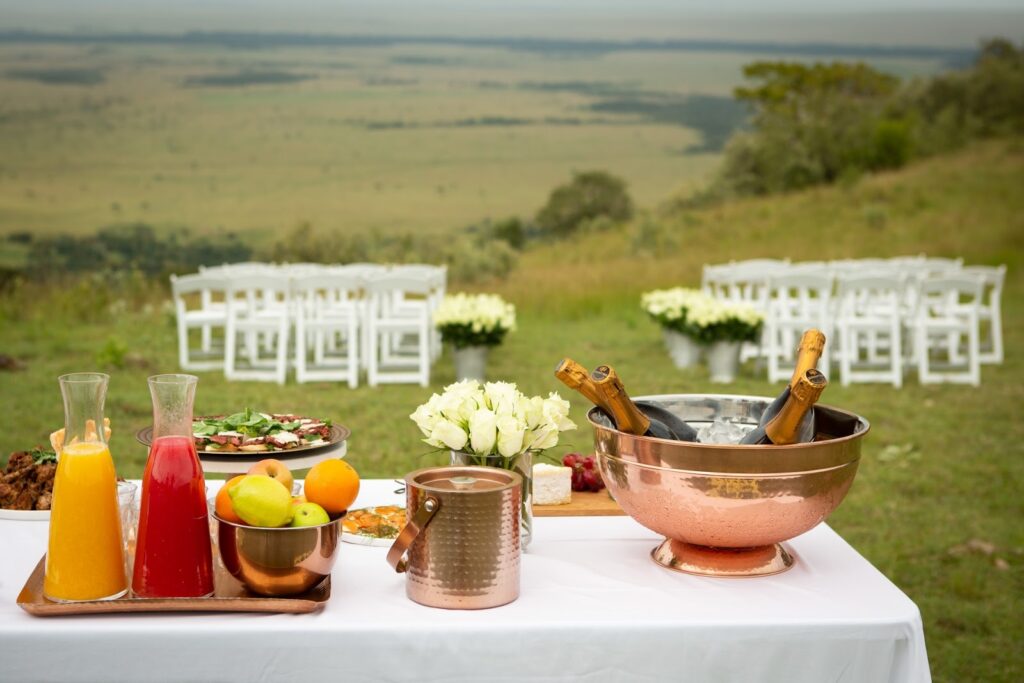
I wasn’t expecting much from the food. Safari camps are remote. Supply trucks come twice a week on roads that barely qualify as roads. So when our chef laid out a bush breakfast on a hillside overlooking the Masai Mara — banana bread from the oven, shakshuka with eggs from a nearby village, freshly squeezed passion fruit juice — I was floored.
Most luxury camps grow their own herbs now. Some keep elephant-proof vegetable gardens and the chefs pick greens the morning they serve them. At one camp, I watched the head chef scatter nasturtium flowers across a mango sorbet. It looked like something from a Michelin spot, except a giraffe was grazing 200 meters away.
The sundowner ritual is something else. Around 6 p.m., your guide parks on a high point, pops the tailgate, and there’s a full bar. Gin and tonics, Amarula on ice, cold Tusker beers. The sky goes from orange to deep violet. A pair of crowned cranes flew past in silhouette. Dinner that night featured nyama choma alongside a lamb tagine with apricots, coconut rice, and wilted sukuma wiki greens. Hippos grunted from the river. That one meal sold me on Kenya more than anything I’d read online.
The private conservancies that make luxury safari experiences possible exist because of the Maasai. They lease ancestral land and receive monthly payments. Without that deal, the wildlife corridors between the Mara and Serengeti would vanish. Samson put it bluntly: “No Maasai partnership, no conservancy. No conservancy, no lions.”
I spent a morning at a village near the Mara North Conservancy. An elder showed me how they build manyatta homes with cow dung, mud, and sticks. The interior was dark and smoky — they keep a fire going inside year-round. It smelled like woodsmoke mixed with something sweet from the olkiloriti bark they burn to repel mosquitoes. The warriors demonstrated their jumping dance, the adumu. I tried. Got about eight inches. They cleared two feet, straight-legged, laughing.
If you’re planning an authentic Maasai Mara safari, ask your camp about a guided bush walk with a Maasai tracker. You’ll spot things invisible from a vehicle — dung beetle trails, medicinal plants the Maasai use for stomach troubles, tiny dik-dik antelope hiding in thornbush.
Masai Mara National Reserve charges non-resident adults $200 per day during high season (July–October) and $100 during low season. That’s per 12 hours. Stay outside the reserve and re-enter the next day? You pay again. Stay inside? Your 24-hour ticket carries over.
Nairobi National Park is $80 per non-resident adult under the latest KWS rates charged via kwspay.ecitizen.go.ke. KWS tried to raise fees in late 2025; the courts suspended the hike, but the new rates still show on the booking portal anyway. It’s confusing. Let your operator handle payment, but check the receipt.
Don’t skip Nairobi National Park. Most people fly straight to the Mara, but NNP is the only national park inside a capital city on the planet. I saw four black rhinos in under an hour there. You can wait days in the Mara and not spot one.
The roads. Driving Nairobi to the Mara takes five to six hours and the last stretch from Narok is brutal. In the rainy season, our vehicle got stuck twice in red mud. Maasai guys appeared from nowhere with shovels. If budget allows, take a bush flight from Wilson Airport — 45 minutes, about $200–$300 one way. Worth every dollar.
The crowds. During peak migration in August and September, Mara River crossings can draw 30–40 vehicles jostling for position. Stay in a private conservancy like Olare Motorogi, Naboisho, or Mara North instead. You won’t see crossings, but you’ll see huge herds with maybe two other vehicles around. That trade-off was worth it for me.
The dust. Fine red dust during dry season gets into everything — your throat, camera bag, ears. Pack a buff and eye drops. I didn’t on my first game drive and spent the evening coughing. Learn from my mistake.
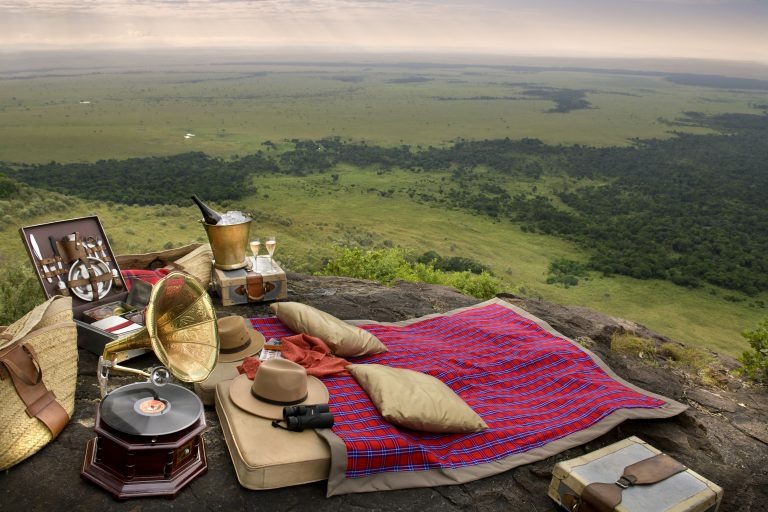
I’ve been fortunate enough to travel through Kenya’s wildlife regions and eat my way across the country. But the luxury safari cracked something open that budget travel didn’t. The conversations with Maasai guides who know every bird call. Chefs who treat a bush breakfast like a creative challenge. Being the only vehicle in a conservancy at sunrise, watching a cheetah hunt.
When you book a luxury safari in Kenya, a portion goes directly to conservation — anti-poaching patrols, community schools, and livestock compensation so Maasai herders don’t poison lions that kill cattle. It’s not a perfect system, but it’s the most functional model I’ve seen in East Africa. Your eTA is at etakenya.go.ke — give yourself a week for processing.
You don’t need to spend a fortune for a great Kenya safari. But if you can swing it even once — the luxury Kenya safari circuit will change the way you think about travel. It changed mine.
MasaiMaraSafari.travel is a helpful resource for Mara-specific logistics and camp comparisons.Disclosure: Park fees and camp rates reflect 2026 pricing and may change without notice. Confirm current rates with your operator or the official KWS portal before booking. The Masai Mara reserve is managed by Narok County, not KWS, and sets its own fees.
Counter
101 Countries • 1432 Cities