
New Zealand sits permanently near the top of every adventure traveler’s list. The bungy jumps, the skydives, the Milford Track, the zorbing in Rotorua — the country has built an entire global identity around adrenaline and dramatic landscapes. And rightly so. But here is the thing that most visitors miss entirely: some of New Zealand’s most extraordinary landscapes are best experienced at a pace that lets you actually absorb them.
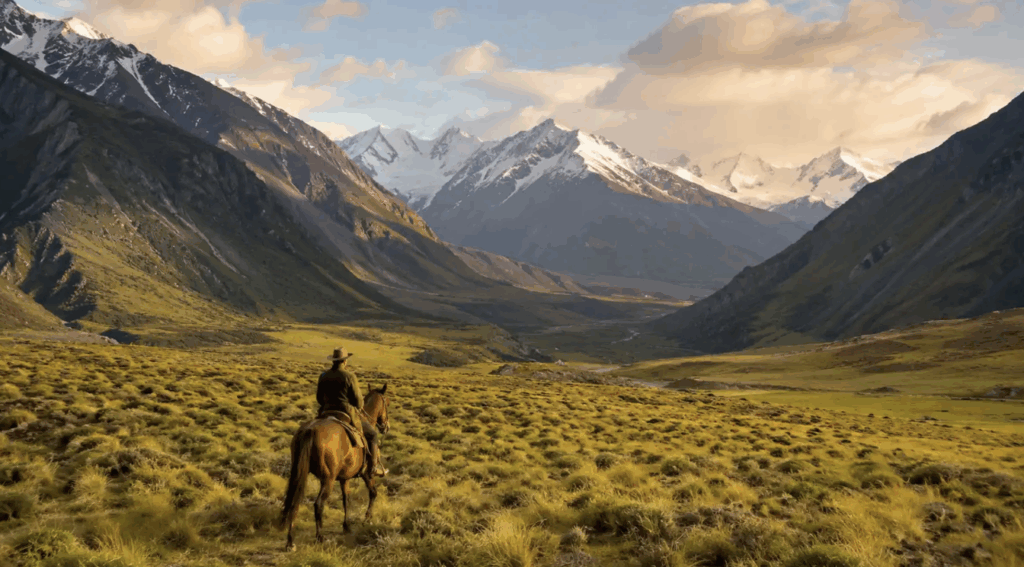
Horse riding in New Zealand does not get the attention it deserves. Not from travel media, not from tour booking platforms, and not from the adventure crowds who arrive in Queenstown ready for the next big thrill. That gap is exactly what makes it worth talking about. This is a destination where getting on a horse and riding through a mountain valley or along a black sand beach produces experiences that no zip line or jet boat can replicate.
New Zealand’s landscape is extraordinary precisely because it is varied and often inaccessible. The terrain shifts dramatically across short distances. Alpine meadows give way to volcanic plains. Coastal cliffs drop to beaches that stretch for miles without a single person in sight. Rainforests press up against farmland that looks like it belongs in a painting.
Horses access this terrain in a way that nothing else does. Tracks that vehicles cannot reach and that hiking would take days to cover open up on horseback within hours. You move through the landscape rather than across it. The perspective from the saddle, at height and in silence, changes the experience entirely.
New Zealand also has a deep connection with horses through its farming history. Many of the best riding operations here are run by families who have worked the same land for generations. That history adds context to the experience that no guided bus tour can offer.
Queenstown and the South Island Interior
The landscapes around Queenstown are among the most photographed in the world for good reason. The Remarkables mountain range, Lake Wakatipu, and the surrounding high country look different from every angle. On horseback, those landscapes become immersive rather than scenic. Rides through the Wakatipu Basin take you into valleys that most visitors never reach on foot.
The Mackenzie Basin further north offers some of the most open riding country in the South Island. Tussock grasslands extend to snow-capped peaks in every direction. The light here in the early morning and late afternoon is unlike anything else in the Southern Hemisphere.
Rotorua and the North Island
Rotorua delivers a completely different experience. Geothermal steam rising from the ground, native bush on all sides, and the cultural context of Māori connection to this land make riding here feel unlike anywhere else. Several operators here work closely with local Māori communities, adding a layer of authenticity that genuinely distinguishes the experience.
The Bay of Islands in Northland is another standout North Island option. Beach rides along unspoiled coastline with views across the island-dotted bay represent the kind of New Zealand that international visitors rarely find on standard itineraries.
The West Coast
The West Coast of the South Island is dramatic, remote, and staggeringly beautiful. Black sand beaches, rainforest, glacier views, and almost no crowds. Horse riding along the coast here combines landscape scale with genuine remoteness that is increasingly rare in popular travel destinations.
New Zealand horse riding is not just a two-hour trail ride for beginners. Multi-day riding journeys are available across several regions, moving between stations and covering significant distances through open country. For travelers who want to experience New Zealand’s dramatic landscapes at a slower pace, horse riding holidays in New Zealand offer an unforgettable alternative to the usual tourist routes — from alpine valleys in Queenstown to geothermal forests in Rotorua.
These multi-day experiences attract a particular type of traveler. Someone who has already done the highlights and wants something that goes further. Someone who is comfortable outdoors and wants the physical engagement of riding combined with the reward of reaching places that itinerary tourism never touches.
Accommodation choices along New Zealand’s best riding regions have improved significantly in recent years. High country stations offer genuine farmstay experiences where the riding connects directly to your accommodation and the people running it. Waking up on a working farm in the Mackenzie Basin, riding out into the surrounding country, and returning to a home-cooked meal around a shared table is a complete experience in itself.
Several regions also now offer glamping places positioned within or near the riding country, giving travelers a way to stay close to the landscape without sacrificing comfort. These suit riders who want the immersive outdoor connection without camping conditions.
Boutique lodges and eco-accommodation along the West Coast pair well with coastal riding itineraries. The quality of small accommodation options in New Zealand is consistently high, which makes multi-day riding journeys logistically straightforward.
Most New Zealand horse riding operators cater to riders across all experience levels. You do not need to be an experienced rider to access the best experiences. Operators provide instruction, appropriate horses matched to your ability, and guides who know the terrain they are riding through.
Group sizes are typically small. This is not a commercial tourist operation where twenty people move in a line through the same route. Most quality New Zealand riding experiences keep groups to six to ten riders, which maintains the quality of the experience and allows genuine flexibility in the riding route.
Booking ahead is essential for the best operators, particularly during the New Zealand summer season from November to March. Spring shoulder season in October and November and autumn in March and April offer excellent riding conditions with smaller crowds and more flexible scheduling.
New Zealand has built its travel identity around big experiences and dramatic landscapes. Horse riding fits both of those qualities while adding something the usual adventure activities cannot offer: time, pace, and a connection to the landscape that stays with you long after the ride ends.
If you have been to New Zealand and experienced the standard adventure menu, come back and do it differently. If you are planning your first visit and want something that most first-timers never find, put the horse riding on the itinerary before you book anything else. You will not regret it.
Counter
101 Countries • 1432 Cities