

Before leaving for a trip, it is important to make sure your home safety devices are working properly. Smoke and carbon monoxide alarms should be tested before you travel, especially if your home will be empty for several days. These devices provide an early warning if a fire starts or carbon monoxide levels rise while you are away. Taking a few minutes to check them can help prevent a small problem from becoming a major emergency.
Many homeowners focus on locking doors and setting security systems before traveling, but life safety devices are just as important. A combined smoke and carbon monoxide detector adds an extra layer of protection by monitoring two common household dangers in a single unit. Making sure the alarm is functioning correctly before your trip can provide greater peace of mind while you are away from home.
A standard alarm only sounds when it detects a threat. A smart alarm does that, and it also sends a notification to your phone the moment something is wrong. This matters most when you are away from home, at work, or asleep in a far room. A remote alert gives you time to act before a situation becomes unmanageable.
Smart alarms can also connect with other alarms in the same home. When one unit detects danger, every connected alarm sounds at once. This whole home alert system is especially useful in larger houses where a single alarm in one room may not be heard in another.
The X-SENSE SC07-MR smart smoke and carbon monoxide alarm uses both a photoelectric smoke sensor and an electrochemical CO sensor. The photoelectric sensor is well suited for detecting slow, smoldering fires, which are common in bedroom and living room settings. The electrochemical CO sensor responds accurately to rising gas levels without frequent false triggers. Together, they cover the two most common household threats.
What sets this model apart is its wireless interconnection capability. Up to 50 devices can be linked through the SBS50 base station, including other X-SENSE alarms and smart devices. When any one alarm in the network triggers, all connected units sound at the same time. You also receive real time push notifications through the X-SENSE Home Security app, so you stay informed whether you are inside or miles away.
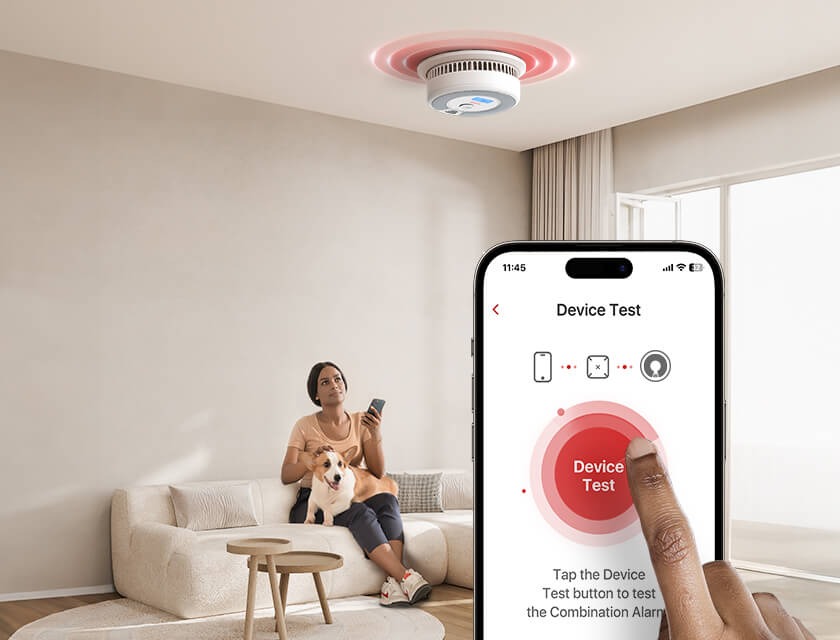
Where you place a combined smoke and carbon monoxide detector matters as much as which model you choose. Install one on every floor of your home, including the basement. Place them inside or just outside every sleeping area so alerts can wake you during the night. The ceiling or high on a wall is the right position for smoke detection, since smoke rises.
Keep the alarm at least 10 feet away from the kitchen to reduce false triggers from cooking. Avoid placing it near windows, vents, or doors where airflow can interfere with accurate sensing. For CO detection specifically, position the unit at least 15 feet from fuel burning appliances like furnaces or gas stoves. Dead air corners and enclosed spaces behind furniture are also poor locations.
Setup is straightforward. Remove the battery insulation film and the device powers on, performs a quick self-check, and enters standby mode. To access smart features such as app notifications, remote status monitoring, and device management, the SC07-MR must be connected to the X-SENSE Home Security app through the SBS50 base station. For households that want connected safety monitoring and shared device access, pairing the detector with the SBS50 base station is the recommended setup.
Not every combined smoke and carbon monoxide detector works the same way. A combined unit includes both a smoke sensor and a carbon monoxide sensor in a single device. The smoke detection side may use different technologies depending on the model, while the carbon monoxide detection side typically relies on an electrochemical sensor for accurate monitoring. When comparing models, it is helpful to look at detection performance, alert features, connectivity options, and overall reliability.
Battery life is another factor. Some models use sealed 10 year batteries, which removes the need to replace batteries during the device’s lifespan. Others, like the SC07-MR, use replaceable batteries that give you more flexibility. An LCD display showing real time CO concentration in parts per million is a practical feature that helps you understand the severity of any reading at a glance.
Testing your alarm monthly takes less than a minute and confirms both sensors are working correctly. Press and hold the test button until the alarm sounds. If it does not respond as expected, check the battery first. A low battery is the most common reason an alarm fails a test or starts chirping at random hours.
Clean the unit gently every six months. Dust and debris can block the sensor chamber and reduce detection accuracy. Use a soft brush or a light blast of compressed air. Never paint over the device or cover it with any material. Most combination detectors should be replaced every ten years, and many models include an end of life alert to remind you when it is time.
If you want a combined smoke and carbon monoxide detector with smart connectivity and wireless interconnection, the X-SENSE SC07-MR smart smoke and carbon monoxide alarm is a strong option. It brings together reliable dual sensor detection, app alerts, and the ability to build a networked alarm system across your entire home. It suits renters and homeowners alike since installation requires no wiring.
For anyone who travels often, works long hours, or simply wants to stay informed from wherever they are, the smart features in this model fill a real gap. Home safety is not something to approach halfway. Choosing a device that covers both smoke and CO, sends real time alerts, and connects with your broader home network means you are not just meeting the minimum standard, you are going well beyond it.
A smoke alarm only detects fire related smoke. A combined detector also monitors carbon monoxide levels, offering dual protection in a single unit.
Install at least one on each floor, one inside or near each bedroom, and one in the basement. A three bedroom home typically needs five or more units for full coverage.
Most manufacturers recommend replacing the device every ten years. Check the manufacture date on the back and watch for any end of life alerts the unit may emit.
Avoid kitchens, bathrooms, garages, areas near windows, and dead air corners behind furniture. These spots increase the risk of false alarms or blocked detection.
Counter
101 Countries • 1432 Cities