

What if we told you that a $90 hotel room and a $3,000 hotel suite could both leave you equally satisfied?
Sounds impossible. Sounds like something a marketing team would say while hoping you do not think about it too hard. But here is the thing. We decided to actually test it. Not with surveys or data sheets or customer satisfaction scores pulled from a corporate report. We tested it the old-fashioned way. We packed a bag, booked rooms across five different Marriott brands at five dramatically different price points, and spent 72 hours moving through the portfolio from bottom to top to answer one deceptively simple question.
Image source: https://all-inclusive.marriott.com/
Does the Marriott promise hold up at every level?
What we found surprised us. Not because the expensive properties were impressive. Of course they were. What surprised us was how the less expensive ones refused to cut corners in the places that actually matter. There is a lesson buried in that observation, and it says everything about why Marriott has dominated global hospitality for the better part of a century.
Here is the full report.
We started at the bottom of the price ladder deliberately. If a company’s commitment to quality is real, it should be visible at its most affordable tier, not just at its most expensive. Anyone can deliver excellence when a guest is paying thousands. The real question is what happens when the nightly rate barely cracks double digits.
Price paid: $94 per night.
We checked into a Fairfield by Marriott property expecting competence. What we got was something notably better than that.
The room was not large. Nobody would call it luxurious. But it was spotlessly clean in a way that felt intentional rather than mechanical. The bed was comfortable, genuinely comfortable, not the kind of hotel bed where you spend ten minutes rearranging pillows before surrendering to a mediocre night of sleep. The bathroom was well-lit, modern, and stocked with products that did not feel like afterthoughts. Wi-Fi connected instantly and stayed fast throughout the stay.
But the detail that stuck with us happened at the front desk. We arrived later than expected, close to midnight. The person checking us in did not rush through the process. Did not slide a key card across the counter with robotic indifference. She made eye contact, asked if we had eaten dinner, and when we said we had not, she pulled out a printed list of nearby restaurants that were still open, complete with her personal recommendations circled in pen.
That list was not part of any corporate manual. That was someone who cared.
At $94, this stay did not try to be something it was not. It did not pretend to be luxury. It did not apologize for being affordable. It simply delivered warmth, cleanliness, and reliability with a quiet confidence that felt remarkably on-brand for a company that operates over 8,500 properties worldwide.
Verdict: The promise holds. Comfortably.
From Fairfield, we moved up to the brand that millions of business travelers consider their second home. Courtyard by Marriott is not glamorous. It does not try to trend on social media. It does not have celebrity chef restaurants or rooftop infinity pools. What it has is something that frequent travelers value far more than any of those things: total predictability in the best possible sense.
Price paid: $189 per night.
The room was noticeably larger than the Fairfield, with a dedicated workspace that actually functioned as a workspace. Not a tiny desk crammed into a corner with a lamp that provides roughly the same illumination as a birthday candle, which is what you get at many competing mid-tier hotels. This was a proper desk, at a proper height, with accessible power outlets and lighting that did not strain the eyes. For anyone who has ever tried to prepare for a morning presentation while hunched over a luggage rack because the room had nowhere else to put a laptop, this matters enormously.
The fitness center was another pleasant surprise. Equipped with modern machines, free weights, and enough space that you did not feel like you were exercising inside a closet. For travelers trying to maintain a workout routine on the road, this alone can determine whether a hotel earns repeat business.
Breakfast was solid, well-organized, and efficient. The coffee was good. Not “good for a hotel.” Actually, it’s good. This sounds like a small thing until you realize how many hotels worldwide fail at the simple task of making drinkable coffee, and how much that failure colors the start of every single day a guest spends under their roof.
At $189 per night, the Courtyard delivered exactly what its core audience needs. Speed. Reliability. Functionality. No friction. And because every dollar spent here earns Marriott Bonvoy points, the business traveler staying 30 or 40 nights a year at properties like this is quietly building a stockpile of rewards that can fund leisure trips at far more luxurious brands down the road.
Verdict: The promise does not just hold. It overdelivers for the audience it serves.
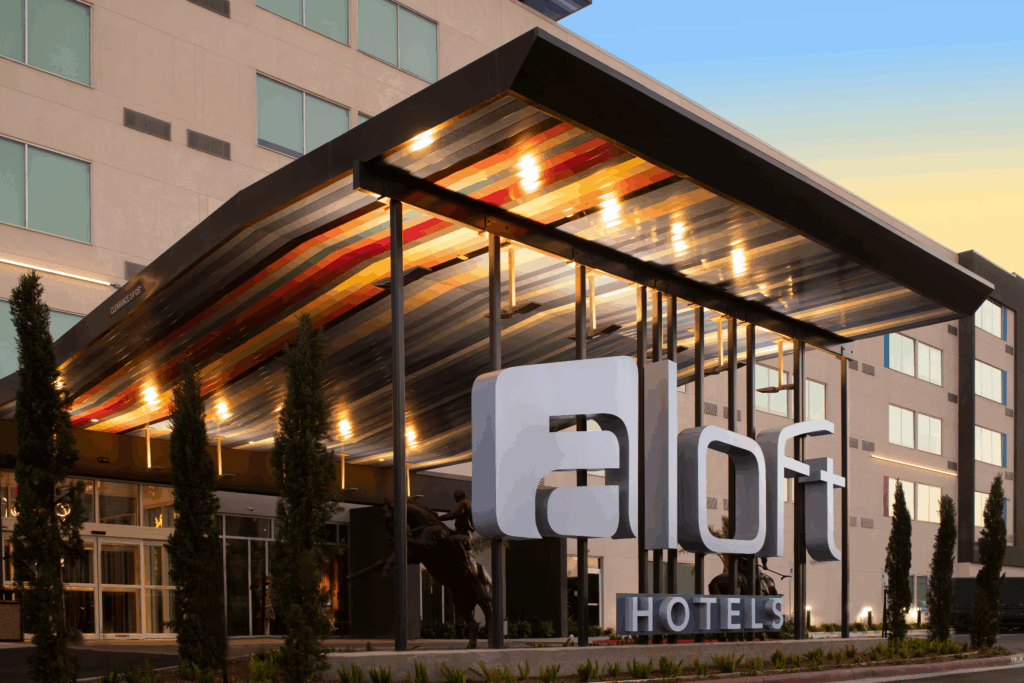
Image source: https://www.marriott.com/en-us/hotels/mfeal-aloft-mcallen/overview/
Moving into premium territory, we checked into an Aloft property, and the shift in atmosphere was immediate.
Price paid: $340 per night.
It started in the lobby. Exposed industrial ceilings, vibrant pops of color, and a live DJ booth set up in the corner where an actual DJ was curating an electronic soundtrack at exactly the right volume. Not loud enough to disrupt conversation, but energetic enough to signal that something different was happening here. The W XYZ bar, a signature Aloft feature, was already busy with a mix of hotel guests and locals enjoying craft cocktails, communicating a single, deliberate message from the moment you walked in: this is where the night begins.
And then there was the Re:fuel by Aloft grab-and-go station.
We need to talk about this concept. Not in the hyperbolic way that hotel marketing typically discusses food and beverage offerings, where every breakfast is “artisanal” and every snack is “locally sourced.” We need to talk about it honestly. Re:fuel is one of the most practical hospitality innovations in recent memory. Available 24 hours a day, it delivers quality sandwiches, salads, fresh fruit, premium snacks, and specialty beverages without any of the friction of traditional room service. You grab what you want, scan it, charge it to your room, and move on with your life.
Aloft reports that guests consistently rank this feature among the most-loved aspects of their stays, and after experiencing it ourselves, we understood why completely. There is a particular frustration in being hungry at 1 AM in a traditional hotel and facing a choice between a $40 room service club sandwich or walking several blocks to find anything open.
Beyond the food, the tech-forward philosophy permeated the entire stay. Mobile check-in worked flawlessly, allowing us to bypass the front desk entirely. The Smart Room technology let us control lighting and temperature from our phones. Splash pool areas and outdoor lounge spaces encouraged social interaction among guests. Even the fitness center exceeded expectations, featuring modern equipment and a spacious layout that felt more like a boutique gym than a standard hotel exercise room.
At $340 per night, Aloft targets a specific type of traveler. Someone who values design and social energy over formality. Someone for whom a hotel is not a retreat from the city but an extension of it. Someone who wants to connect with interesting people, hear good music, and sleep in a stylish room without paying ultra-luxury prices.
For that traveler, there is simply nothing else in this price range that competes.
Verdict: The promise holds, and it has a very specific, very compelling shape.
If Aloft whispered “let’s go out,” Renaissance Hotels said something different. It said, without a hint of pretension, “Let us show you a side of this city you would never find on your own.”
Price paid: $680 per night.
The experience began before we arrived. A pre-arrival email introduced us to our Navigator, the Renaissance signature role designed around a single idea: every destination has hidden layers, and a great hotel should reveal them rather than hide them behind generic tourist recommendations. Not a generic questionnaire with checkboxes. A personal note from the Navigator asking whether we were interested in local music, independent coffee culture, street art, craft cocktails, or hidden culinary gems.
At check-in, the associate greeted us by name. Our room was not merely ready. It was prepared. A handwritten welcome note from the Navigator sat on the desk with three specific recommendations tailored to the interests we had mentioned. Each one came with addresses, the best times to visit, and a personal note about why it was special.
The service throughout the stay operated on a level that is difficult to describe without sounding excessive. A staff member noticed us studying a neighborhood map in the lobby and appeared within seconds to suggest a walking route that linked a century-old bookstore, a speakeasy behind an unmarked door, and a rooftop with an unobstructed skyline view. When we mentioned casually that we were interested in the local jazz scene, a printed card with venue recommendations, showtimes, and Navigator commentary appeared in our room that afternoon.
None of these gestures were grand. None of them were expensive. But together, they created an atmosphere where you felt immersed rather than entertained, guided rather than sold to. This is the Renaissance philosophy distilled to its essence. They do not want you to experience a generic version of the city. They want you to experience the city as a local would, with the kind of insider perspective that normally takes years to develop.
The design of the property itself reinforced this approach. Renaissance Hotels are known for their distinctive, locally inspired interiors, and ours was no exception. Artwork from regional artists, furniture that referenced local craftsmanship, and public spaces that felt specific to the city rather than interchangeable with any other hotel lobby anywhere in the world.
At $680 per night for our room, with suites and premium categories ascending into higher tiers at flagship properties, Renaissance is not competing on price. It is competing on the emotional experience of genuine cultural connection, the rare hotel experience that makes you feel you actually know a place rather than merely visited it. For travelers who measure the quality of a trip by the stories they bring home rather than the photos they post, the investment pays for itself many times over.
Verdict: The promise does not just hold. It redefines what hospitality can do for the modern explorer.
Image source: https://www.marriott.com/en-us/hotels/chixr-the-st-regis-chicago/overview/
Our final stop pushed into the highest tier of the Marriott portfolio, and it delivered an experience so singular that comparing it to other hotels feels almost unfair. St. Regis does not play the same game as its competitors. It plays a different game entirely and has been winning it since 1904.
Price paid: $975 per night.
The Butler Service is the headline, and it deserves to be. Within minutes of arriving, our assigned butler introduced himself, offered to unpack our luggage (we accepted, slightly self-consciously), and presented a schedule of available services that included garment pressing, shoe shine, coffee and tea service at any hour, restaurant reservations, and coordination of any local activities or transportation we might need during our stay.
Over the course of our stay, we tested the boundaries of this service, gently. A late-night request for a specific herbal tea that was not on the menu. Handled within fifteen minutes. A morning request to have a suit pressed before an early meeting. Completed and hanging in the closet before we finished showering. An inquiry about a specific local bookshop that we had read about. Directions, opening hours, and a personal recommendation from the butler about which section to visit first, delivered on a printed card slipped under the door.
The room itself was magnificent, more residential than hotel in its proportions and finishes. Marble surfaces, bespoke furniture, artwork that belonged in a gallery, and a bathroom that could comfortably host a small dinner party. But what lingers in memory is not the physical space. It is the feeling of having someone whose entire purpose is to make your stay seamless, someone who remembers that you mentioned a preference once and treats it as permanent knowledge. Flagship properties like the St. Regis New York and the breathtaking St. Regis Maldives Vommuli Resort push rates well beyond $1,200 per night and into territory where the numbers matter less than the experience. For travelers at this tier, the question is never whether the price is justified. It is whether anyone else can deliver what St. Regis delivers. The answer, consistently, is no.
Verdict: This is not just a hotel stay. It is a masterclass in what personal hospitality can be.
Here is the detail that transforms the entire Marriott portfolio from a collection of good hotels into something strategically brilliant. Every single one of these stays, from the $94 Fairfield night to the $975 St. Regis experience, earned points within the same loyalty ecosystem.
Marriott Bonvoy is the connective tissue of this empire, and understanding it is the difference between traveling well and traveling exceptionally.
The tier structure rewards cumulative loyalty in ways that compound over time. Silver Elite at 10 nights per year provides priority late checkout and a 10% points bonus. Gold Elite at 25 nights adds enhanced room upgrades, guaranteed 2 PM late checkout, and a 25% points bonus. Platinum Elite at 50 nights unlocks the transformative tier with suite upgrades when available, complimentary breakfast or welcome gifts of up to 1,000 bonus points, executive lounge access, and a 50% points bonus. Titanium Elite at 75 nights and Ambassador Elite at 100 nights plus $23,000 in qualifying spend elevate the experience further with a personal Marriott Ambassador who manages your preferences across the entire global portfolio.
Points redemption operates on a category system where a Category 1 property might cost just 5,000 points per night while a peak Category 8 ultra-luxury stay could require 85,000 points or more. The ability to transfer points to over 40 airline partners adds another dimension, meaning your hotel loyalty can directly fund your flights.
The math is elegant. A year of Courtyard business travel generates enough points for a free week at a Westin resort. Two years of consistent mid-tier stays can fund a Ritz-Carlton redemption that would otherwise cost thousands out of pocket. The system rewards patience and consistency in a way that no competitor has matched.
Our 72-hour test focused on traditional hotel properties. But there is one more layer of the Marriott ecosystem that deserves attention because it solves a problem that even the finest hotel suites cannot address.
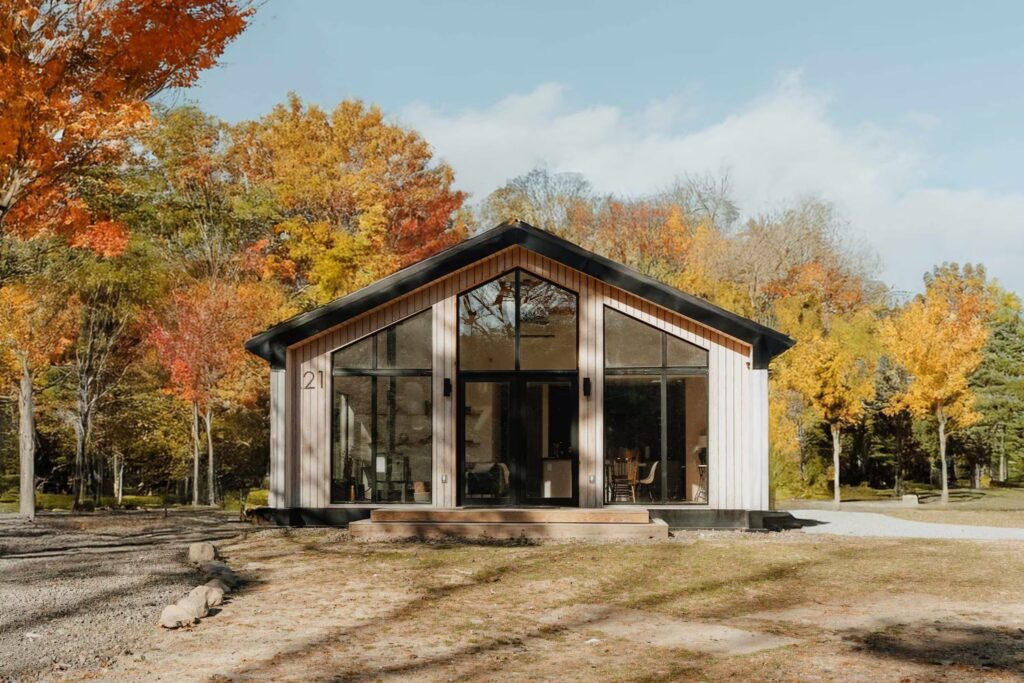
Homes and Villas by Marriott Bonvoy is a curated collection of premium private home rentals that operates entirely within the Bonvoy ecosystem. Think luxury apartments, beachfront villas, countryside estates, and historic properties, all vetted for quality and all eligible for Bonvoy points earning and redemption.
This platform exists for a specific and important reason. When your traveling party exceeds what hotel rooms can comfortably contain, when you need a full kitchen and communal living space, when privacy matters more than room service, the Homes and Villas collection provides exactly what traditional hotels cannot. Properties range from approximately $150 per night for a curated city apartment to $3,000 or more per night for extraordinary multi-bedroom estates with private pools and dedicated staff.
Two current promotions make this option especially attractive right now. Eligible guests can save 10% on select home rentals for stays of two or more nights with travel valid through the end of July. Additionally, a separate offer lets guests earn 2,000 bonus Marriott Bonvoy points per night, up to 10,000 bonus points per stay, on qualifying bookings of two nights or more with stays available through summer. Both promotions apply to cash and points reservations, ensuring flexibility regardless of how you prefer to book.
For large family gatherings, group celebrations, or simply travelers who crave residential-scale space without leaving the Bonvoy universe, this is the seamless alternative that keeps your loyalty working for you.
After 72 hours, five brands, and price points spanning nearly a tenfold range, our conclusion is straightforward.
The Marriott promise is real, and it scales.
It scales downward with grace, delivering genuine warmth and reliability at price points that anyone can access. It scales upward with artistry, delivering service experiences that rank among the finest available anywhere on earth. And it does all of this within a single loyalty ecosystem that ensures every dollar you spend today makes tomorrow’s travel richer, more rewarding, and more memorable.
In a marketplace overflowing with options, noise, and uncertainty, that consistency is not just an advantage. It is the reason experienced travelers stopped shopping around a long time ago.
Disclaimer: This article may contain affiliate links, and we may earn a commission if you make a purchase through these links.
Counter
101 Countries • 1432 Cities

