
There were 3,024 fatal pedestrian accidents in the United States in the first half of 2025 according to the Governors Highway Safety Association (GHSA). This figure was the most significant decline registered by GHSA in the fifteen years of recording pedestrian accidents.
Having a grasp of the top causes of pedestrian accidents is very critical for anyone looking to file a claim after being involved in an accident as a pedestrian.
There are known causes such as distracted driving and/or alcohol impairment. Others receive less attention, including the documented relationship between vehicle type and fatality rates, and the striking proportion of deaths that occur on streets without any sidewalk at all. Both factors show up consistently in crash data, and both are directly relevant to how liability gets established in a pedestrian injury case.
Let’s take a look at some of the reasons for pedestrian accidents and examine how to avoid them.
There are several reasons why pedestrian accidents happen. But most commonly, distraction is one of its top contributing factors. In fact, the National Highway Traffic Safety Administration (NHTSA) claims over 3,000 deaths in 2023 resulted from distracted driving.
Still, some researchers criticize this report for possibly underestimating the actual death toll. With discrepancies arising from underreported incidents, there are accident reports that exclude distraction as a factor. The data further showed that the proportion of distracted driving increased the most between 2020 and 2023 as compared to an increase of 140 percent.
For pedestrians, distraction is especially risky, since the moment a driver has to respond and then come to a halt is so brief. If a driver checks a phone for even about two seconds at 30 mph, they cover the whole length of a crosswalk before looking again. It is not uncommon for pedestrian accident lawyers to encounter situations where examining phone call data, vehicle camera footage, or other first-party accounts will very obviously show that the driver had no control over the vehicle at the specific moment of collision.
According to Michigan pedestrian accident lawyer Gerald E. Wigod, documenting every aspect of your crash is critical to a successful pedestrian accident claim. These claims rely on solid evidence to demonstrate that a liable party was responsible for the accident.
The impact of alcohol and drug misuse on performance relates to an individual’s perception of space, reaction time, and sound judgment. A driver under the influence of alcohol may misjudge how quick a person is walking across a pedestrian crossing. The driver might even knock them down or fail to notice them while crossing, only to see the traffic light just a few meters away from the vehicle.
The National Institute on Alcohol Abuse and Alcoholism (NIAAA) has already noted that even “moderate” alcohol intake can reduce the visual processing and the focus needed to spot pedestrians in low-contrast scenes.
Impaired driving is a frequent cause of nighttime pedestrian fatalities. Nearly 75% of pedestrian fatalities in 2024, according to NHTSA, occurred both with and without artificial lights present. The time of the day and poor driver vision increase the likelihood of a driver committing mistakes and add risks for pedestrians.
Speed is not merely a traffic violation in pedestrian crash cases. It is a direct determinant of survivability. Research cited by the Insurance Institute for Highway Safety (IIHS) suggests that pedestrians struck at around 23 mph have roughly a 10 percent chance of dying, but once the impact is about 42 mph, the risk of death goes beyond 50 percent. The pattern here is not a clean, straight line either. Small upticks in speed can lead to big spikes in fatality risk.
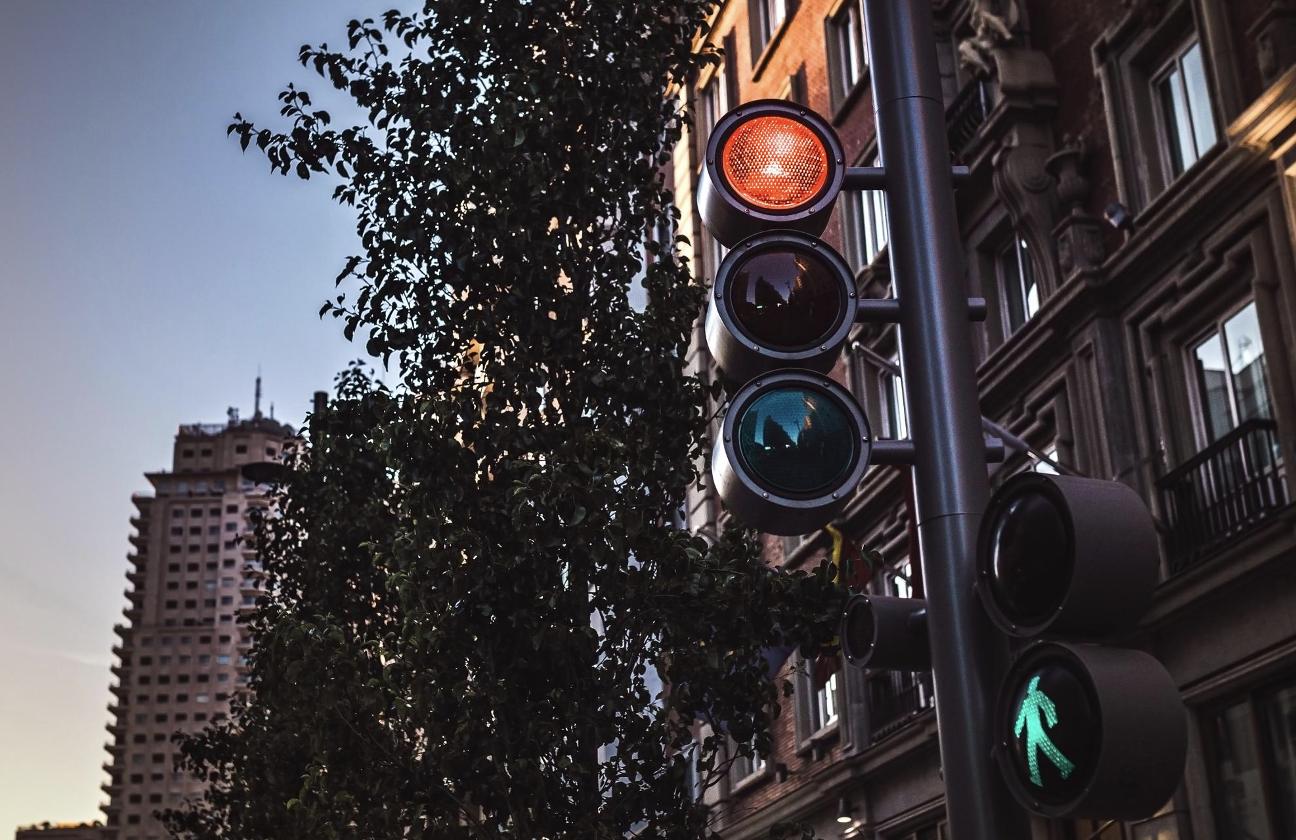
Certain driving behaviors could worsen the situation. Speeding at traffic signals and ignoring pedestrian signals are among the prevalent driver offenses reported in accident studies as causes of accidents.
Visibility conditions mess with both the driver’s ability to spot a pedestrian and the pedestrian’s chance to judge the oncoming flow at the same time. Rain, fog, and even the glare off wet pavement can really mess with a driver’s line of sight, causing pedestrians to be harder to spot.
The time of day is also a factor. Those early morning hours before dawn, plus the stretch right after sunset, come with higher risk since drivers’ eyes aren’t fully acclimated yet. Also, pedestrian clothes can blend into the background.
Safety researchers affiliated with the Transportation Research Board (TRB) looked into the correlation of inadequate traffic lighting at crosswalks and the higher percentage of pedestrian fatalities when other factors such as speeding cars and the flow of traffic are not taken into account.
The GHSA report on 2023 crash statistics estimates that approximately 65% of fatal pedestrian accidents have taken place in the absence of sidewalks. This rule typically applies only where people are meant to move on sidewalks and no alternatives are available.
Sidewalks cut pedestrians off from vehicle traffic in a physical way. There are missing sidewalks or those that are not maintained. With these road problems, pedestrians are compelled to walk on the edges of the roadway or along the street edge.
There are also unsignaled crosswalks and neglected or non-existent line markers. These imbue a sense of ambiguity about who has the right-of-way. That uncertainty often leads to a driver mistake. Infrastructure failures of this kind bear directly on liability when pedestrian accident cases go to trial.
Pedestrian injury cases increasingly involve a factor that is absent from older discussions of crash causation, which is the growing proportion of large vehicles in the American fleet.
Light trucks, a category that includes SUVs and pickup trucks, accounted for 54 percent of pedestrian fatalities in 2023, where vehicle type was documented, compared to 37 percent for passenger cars, according to GHSA’s 2024 pedestrian fatality data.
The shift was not caused by light trucks being driven more dangerously but rather reflects the physics of vehicle design. The hood height and front-end profile of SUVs and trucks concentrate impact force at the torso and head of an adult pedestrian, rather than the lower legs.
Injuries are typically more severe, and fatality rates per collision are higher than with smaller passenger vehicles at equivalent speeds. This is documented engineering data that pedestrian accident attorneys use alongside crash reconstruction evidence when assessing the full scope of damages in a case.
Studies have shown that the rationale behind the severe injury and death of pedestrians can be attributed mainly to the practices of drivers and the limitations in the road environment. Distraction, impairment, and speed cannot be a simple instance of coincidence. These crash causes are conscious decisions that drivers make before the vehicle hits the pedestrian. The absence of sidewalks and crosswalk infrastructure is a planning and maintenance failure that creates conditions where crashes become predictable.
For injured pedestrians and their families, understanding the cause of a crash is not background knowledge. It acts as the base of any claim. Establishing what a driver was doing in the seconds before impact, the visibility conditions that existed, and what the road looked like are important.
Establishing even what vehicle was involved shapes both liability and the way damages are calculated. Cases that document these factors thoroughly from the beginning are in the best position to pursue full compensation under existing federal and state traffic safety standards.
Counter
101 Countries • 1432 Cities