
A camper van turns a road trip into something closer to a home you can park almost anywhere. The catch is that the van is only as good as the shop that built it, and the gap between a thoughtful conversion and a leaky weekend project is enormous. If you would rather buy expertise than learn cabinetry the hard way, the right camper van builder makes all the difference. These are the ten worth knowing in 2026.
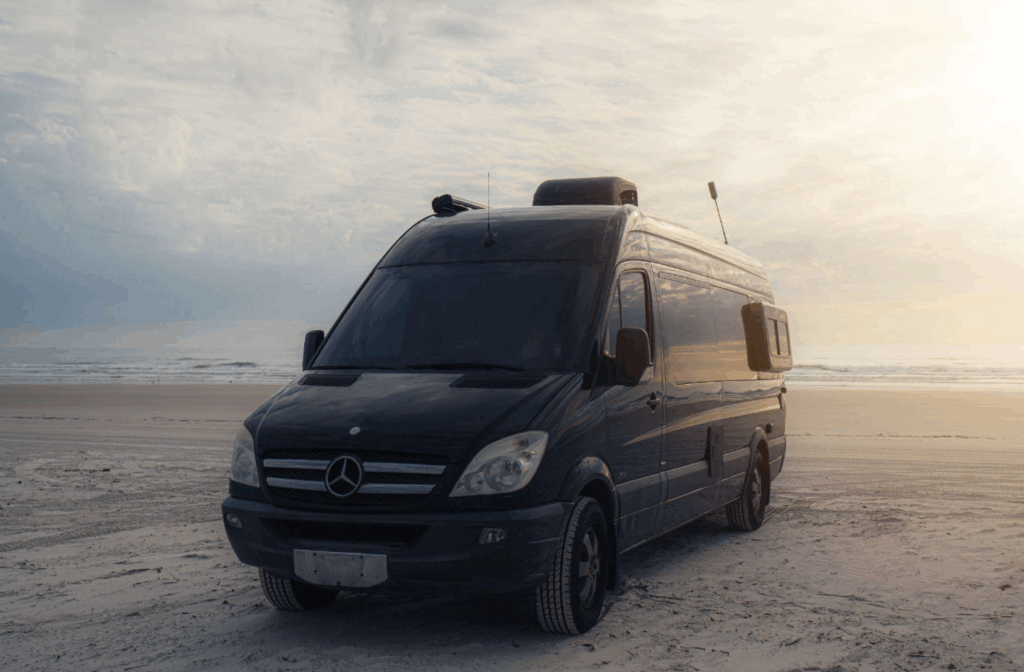
One of the few premium builders on the East Coast, Brooklyn Campervans works out of New York City and takes a deliberately small-batch approach, building a limited number of vans at a time rather than chasing volume. Every conversion starts on the Mercedes-Benz Sprinter, and the shop leans hard into tech-forward, space-saving design.
Its signature touches show that focus: an elevator bed that lifts out of the way to open up a full lounge, walkable solar panels on a rooftop deck, slide-out skylights, and battery systems large enough to run off-grid for extended stretches. An online configurator lets you price and spec a layout before you ever pick up the phone, and the same expertise carries into mobile-office builds for remote workers. Conversions start around $92,000, and most land near $120,000 before the van itself, so this sits at the upper end. The catch is focus: Brooklyn Campervans only does full start-to-finish builds on Sprinters, so it is not the place for a partial project or a different chassis.
2. Storyteller Overland
Storyteller Overland occupies an interesting middle ground between a custom shop and a manufacturer. Rather than one-off builds, it produces defined models like the MODE lineup, which pairs modular interiors and high-end finishes with genuine four-season, off-grid capability.
The appeal is consistency. Because these are production vans, you know what you are getting, and the company has invested heavily in power systems and durability for travelers who venture well past the campground. If your priority is a proven, warranty-backed rig you can order and pick up rather than co-design over many months, Storyteller belongs on your shortlist. The trade-off is less say over the layout than a bespoke builder would give you.
Vanworks predates most of the van life movement entirely. Founded in 1978 in Loveland, Colorado, it has more than 40 years and thousands of conversions to its name, and it was among the first American shops to build on the Mercedes Sprinter.
Today, it offers defined builds like the Nomad, Switchback, and Greyrock across both Sprinter and Transit chassis, giving buyers a few proven layouts to choose from rather than starting with a blank sheet. The company also sells accessories and add-ons, including awnings, solar, and heated seats, and serves customers nationwide from its Colorado base. The long track record is the real selling point. A shop that has been solving van problems since the Carter administration has almost certainly seen yours before.
Portland, Oregon’s Outside Van has grown since 2007 into one of the most recognizable names at the premium end of the market. A team of more than 75 people turns out over 100 custom conversions a year, and the builds lean toward rugged, nature-first rigs meant for people who spend real time outdoors.
You can go fully bespoke or start from one of the company’s ready-to-roll models, which have recently been listed in the mid-$200,000 range. Outside Van also keeps a rotating selection of serviced pre-owned vans, a useful option if you want the build quality without the wait or the full sticker. This is not a budget choice, but for buyers who treat a van as a long-term basecamp, the finish and engineering justify the premium.
Based in Boulder, Colorado, The Vansmith has built a reputation for restraint. Its Sprinter-based Bivy Plus is a good example of the house style: calm interiors, efficient layouts, and dependable systems rather than a spec sheet stuffed with features you will rarely use.
The shop builds on most major platforms and emphasizes livability, which is a polite way of saying its vans are designed to be comfortable on day 200, not just day one. Balanced electrical systems and thoughtful storage are recurring themes. Pricing tends to sit below the six-figure extremes some competitors reach, which has made The Vansmith a frequent recommendation for people building their first full-time van without chasing the most expensive rig on the lot.
6. Sportsmobile
If longevity signals anything, Sportsmobile has it. With locations in Huntington, Indiana; Austin, Texas; and Gold Canyon, Arizona, it is widely credited as the oldest van conversion company in the country, with more than 60 years of builds behind it. The shop converts a broad range of platforms, including the Ford Transit, Ram ProMaster, and Chevy Express, and its 4×4 packages for the Transit and Express have a loyal following among travelers who like to leave pavement behind.
The process is straightforward: settle on a floor plan and options, and Sportsmobile quotes the conversion, whether you supply the van or they source it. A $4,000 non-refundable deposit holds your spot in the production queue, and the work is backed by a 3-year/36,000-mile conversion warranty, one of the more generous in the industry. Financing is available too, which makes it an accessible entry point for a first serious build.
TOURIG, out of Golden, Colorado, has been building since 2015 and focuses its energy on the Mercedes Sprinter and Ford Transit. The shop is known for clean, high-quality custom work, and it rounds out its business with a deep menu of service, upgrade, and installation jobs, from suspension and heating to full interior upfits.
A complete TOURIG vehicle generally starts around $149,000, though the company works across a range of budgets and build styles. It also sells prebuilt rigs, used vans, and even overland trailers, so there are several ways in, depending on how much you want to spend and how quickly you need to be on the road. For buyers who want a polished custom van without a multi-year commitment, the prebuilt inventory is worth watching.
8. Blue Ridge Adventure Vehicles
The East Coast is underserved by top builders, which makes Blue Ridge Adventure Vehicles a genuinely valuable option. The shop sits in Fairview, North Carolina, just outside Asheville and a short drive from the Blue Ridge Parkway, one of the most-visited units in the National Park System. With 16 years in the community, it builds custom adventure vehicles across a wide range of budgets and complexity.
What sets it apart is flexibility. Full builds run from modest starting points around $5,000 for basic build-outs up to $45,000 and beyond for high-capability rigs, and the team also consults for DIY builders at an hourly rate for those who want expert guidance without handing over the whole project. A published price guide gives prospective clients a clear sense of features and costs upfront, which is rarer in this industry than it should be.
If your heart belongs to Volkswagen, Peace Vans is the specialist. The Seattle, Washington shop works almost exclusively on VW campervans, both restoring vintage models and modernizing newer ones, and it has extended that expertise to upfits of the electric ID. Buzz.
This is a narrower focus than the all-platform shops, and that is the point. Peace Vans understands the quirks of the VW legacy better than a generalist ever could, and its builds blend nostalgia with modern comfort in a way that keeps enthusiasts coming back. For anyone chasing the classic camper silhouette rather than a boxy Sprinter, it is close to the only serious game in town.
Not everyone needs a six-figure rig, and Colorado Camper Van has built its business on that reality. Operating out of a 14,000-square-foot warehouse in Loveland, Colorado, the shop specializes in pop-top conversions and interior builds on nearly any vehicle, from Transits and ProMasters to older Chevy Express and Ford E-Series vans.
The pricing is refreshingly accessible. Interior conversions like the Base Camp start in the high $20,000s, and base pop-top installs begin under $16,000, with discounted DIY pop-top kits for the mechanically confident. Adding a pop-top or interior generally lifts a van’s resale value, too. For buyers who want more headroom and a place to sleep without financing a house, this is one of the most practical names on the list.
What separates a great camper van builder
Van life has outgrown its cult status. The RV Industry Association counted 342,220 RV shipments in 2025, and compact Class B camper vans have been one of the segment’s steadier performers as buyers trade square footage for the freedom to park in places a motorhome never could. That demand has produced a wide field of builders, and they are not interchangeable.
At one end sit large, decades-old shops that run production lines and publish fixed floor plans. At the other are small studios that build only a handful of vans a year and design each one around a single owner. A legacy company shipping hundreds of rigs works very differently from a boutique operation that takes on a limited run of custom Sprinters at a time. Neither is better in the abstract; the right fit depends on your budget, your timeline, and how custom you want to go.
Before you commit, it helps to know how you will actually use the van. A weekend rig for spring road trips across America has different priorities than a four-season home for full-time travel, and the best builders will steer you toward the layout that matches rather than the one with the biggest markup.
The ten shops above cover a lot of ground, so narrowing the field comes down to a few honest questions.
Budget comes first. A pop-top or interior conversion can start under $20,000, while a fully custom four-season Sprinter routinely clears $150,000 before you add the van itself. Decide what you can realistically spend before you fall in love with a build gallery.
Then think about the chassis. The Mercedes-Benz Sprinter remains the default for premium conversions thanks to its high-roof standing room, available all-wheel drive, and strong resale value. The Ford Transit is the value alternative, with a wide payload range and a nationwide service network that makes repairs easier on the road. The Ram ProMaster, with its wider, boxier interior, rounds out the big three. A good builder will help you match the platform to your travel style rather than pushing whatever is on the lot.
Finally, be honest about how you will travel. If your plans run from the beaches of Miami to the canyons of Utah, you will want reliable climate control and a serious electrical system; a fair-weather weekender can skip a lot of that expense. Where you plan to sleep matters as well, whether you are reserving sites through the federal Recreation.gov system or parking off-grid on public land. The builder that fits is the one whose typical work already looks like the trips you intend to take.
Custom camper vans typically range from about $15,000 for a basic interior or pop-top conversion to well over $150,000 for a fully equipped four-season Sprinter build, not counting the base vehicle. Most full custom conversions land somewhere in the $60,000 to $120,000 range for the build alone. Where you fall depends on the chassis, the electrical and water systems, and how much cabinetry and finish work you want. Adding the van itself and a premium all-in rig can approach $200,000.
Most full custom conversions take several months, and popular builders often have waitlists that push the start date out further. Simpler jobs like a pop-top install or a partial build can be done in weeks. If you need to be on the road sooner, look at builders that sell prebuilt or used inventory. Always ask for a realistic timeline in writing before you place a deposit.
The Mercedes-Benz Sprinter, Ford Transit, and Ram ProMaster are the three dominant platforms, and each suits a different priority. The Sprinter leads on premium feel, standing room, and resale value; the Transit offers strong value and easy nationwide service; and the ProMaster maximizes interior width on a tighter budget. For off-grid and winter travel, an all-wheel-drive Sprinter or Transit is the common choice. The right answer depends on your budget and where you plan to drive.
For most buyers, yes, a professional build is worth it if you value reliability, safety, and time over raw cost savings. A good builder handles the parts that often go wrong in amateur projects, including electrical systems, insulation, and water management, and backs the work with a warranty. DIY can save money and be deeply rewarding, but it demands real skills and months of labor. Several builders on this list, including Blue Ridge Adventure Vehicles and Colorado Camper Van, offer a middle path with DIY kits and consulting.
Reliability tracks closely with track record, and shops like Sportsmobile and Vanworks have decades of builds behind them. Longevity means they have already solved the problems that trip up newer operations and are likely to be around to honor a warranty. That said, several younger builders have earned strong reputations quickly. The most reliable choice is the one whose past work and warranty terms you can actually verify.
Yes, most established builders offer financing or work with lenders who specialize in RV and conversion loans. Monthly payments vary widely with the loan amount, term, and your credit, but buyers of six-figure builds commonly see payments in the $1,000-plus range. Getting pre-qualified before you design the van helps you set a realistic budget. Treat the financing conversation as part of choosing the builder, not an afterthought.
Yes, off-grid power is a core part of most modern conversions, and quality builders design the solar, battery, and charging systems around how you travel. Setups range from modest weekend systems to large lithium banks with rooftop solar capable of running a fridge, an induction cooktop, and even air conditioning. Be specific about your power needs early, since the electrical system shapes much of the rest of the layout. This is one area where professional builds clearly outperform most DIY attempts.
A pop-top is worth it if you want extra sleeping space or standing headroom without moving to a taller, harder-to-park van. It adds berths and light and generally improves resale value, though it does add cost and one more component to maintain. Shops like Colorado Camper Van specialize in pop-tops and even sell DIY kits for lower-roof vans. For families or couples who want room to spread out, the trade is usually worthwhile.
Well-built camper vans on desirable platforms tend to hold value better than most vehicles, especially quality Sprinter conversions from respected builders. Adding a pop-top or a professional interior generally increases a van’s resale value rather than diminishing it. Condition, brand reputation, and the base chassis all factor in. As with any vehicle, a documented build history and good maintenance protect your investment.
Yes, plenty of people live in camper vans full-time, and many builders design specifically for it. Full-time living calls for a four-season build with serious insulation, heating, a larger electrical and water system, and durable materials that hold up to daily use. Weekend-oriented vans cut corners in exactly these areas, so tell your builder upfront if you plan to live aboard. The layout that survives a full year of daily travel is very different from a fair-weather setup.
The best camper van builder for you is not automatically the one with the glossiest photos or the longest waitlist. It is the shop whose typical work, budget range, and chassis expertise line up with the trips you actually plan to take. Whether that means a six-figure four-season Sprinter, a budget pop-top, or a restored VW with decades of character, the ten builders here give you a strong, credible field to start from in 2026.
Counter
101 Countries • 1432 Cities