No, entering an intersection on a yellow light does not automatically make you responsible for a crash. In most states, a yellow light is a warning that the signal is about to turn red, not an order that makes entering illegal.
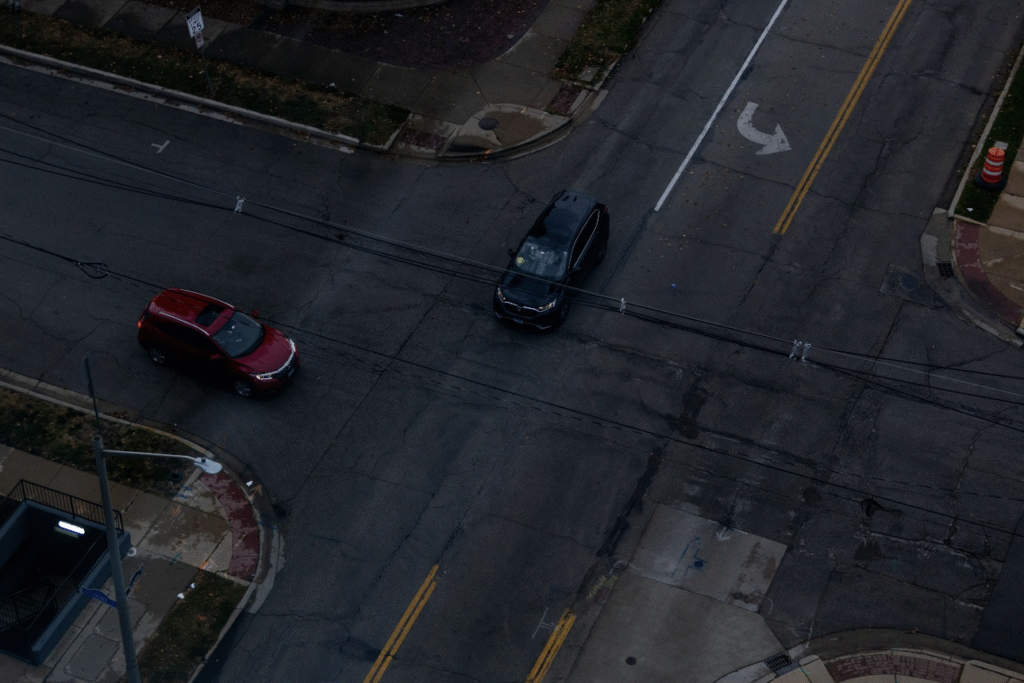
Fault depends on more than the color of the light. Speed, distance from the intersection, and what the other driver did all play a role.
This question often comes up after a serious accident, when insurers and drivers disagree about who had the right to be in the intersection. The answer usually turns on a closer look at timing and driver behavior.
Let’s have a closer look!
Yellow light rules are not identical everywhere. Most states follow a warning approach, while a smaller number treat yellow more strictly.
For example, California Vehicle Code § 21452(a) says a steady yellow signal warns drivers that the green movement is ending and a red light will follow right away. Under that wording, a driver who enters on yellow has not broken the law.
Some states take a stricter view, requiring drivers to stop on yellow if they can do so safely. In those states, entering on yellow when stopping was possible may be treated as a violation.
Insurers and courts look at the whole sequence of events, not just the signal color. A legal entry on yellow can still lead to partial fault if the driver acted carelessly.
Factors that often matter include:
Under comparative fault rules used in most states, fault can be split between drivers. A driver who entered on yellow might be found 20 percent at fault, while the other driver carries the rest.
Fault questions shift depending on the type of crash.
California Vehicle Code § 21801(a) requires a driver turning left to yield to oncoming vehicles close enough to be a hazard.
If the oncoming driver entered lawfully on yellow, the turning driver often carries most of the fault. However, the oncoming driver may share blame if they were speeding or distracted.
A driver who enters on yellow is usually allowed to finish crossing, even if the light turns red while they are in the intersection. Cross traffic that gets a green light must still yield to vehicles already clearing the intersection.
Sometimes a driver stops for a yellow light and gets hit from behind. The following driver is usually at fault because they must keep a safe distance and be ready to stop.
Because seconds matter, timing evidence often decides these cases.
Useful evidence includes:
Signal timing records can be especially helpful. They show how long the yellow phase lasted, which can support or challenge a driver’s account.
What a driver says and does after the crash can affect how fault is assigned. Avoiding these errors protects a strong position.
Counter
101 Countries • 1432 Cities