
A wedding on a mountaintop or a beach at sunset comes with its own set of practical questions, and somewhere between the guest list logistics and the weather contingency plan, more couples are also rethinking what’s on the ring finger.
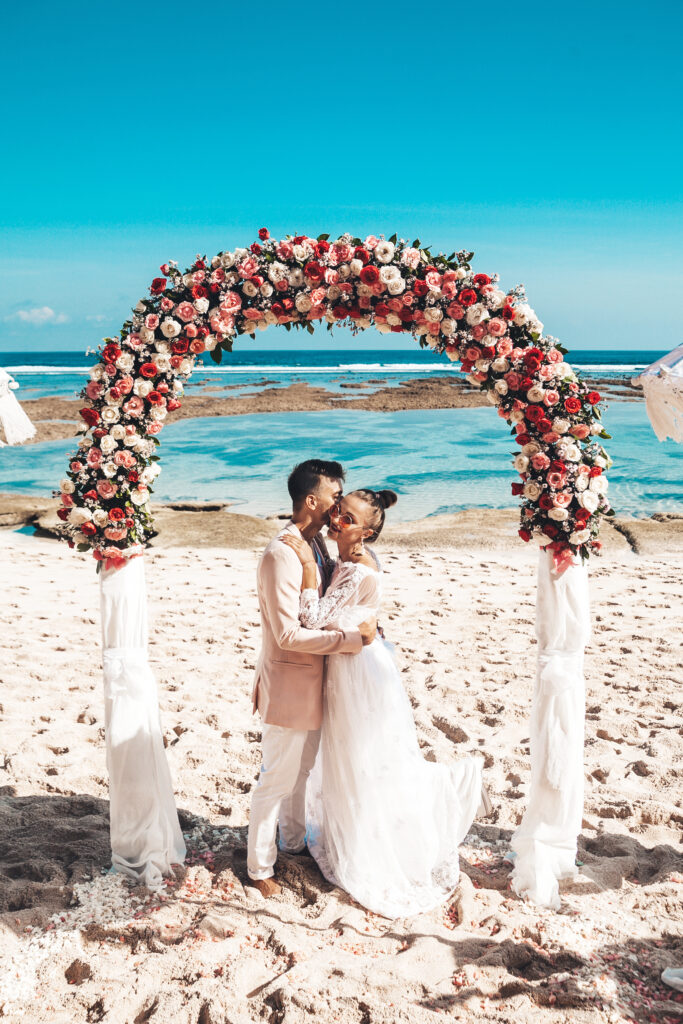
Couples planning destination weddings across New York and beyond have increasingly gravitated towards lab-grown diamonds, and the reasons go well beyond price. The fit between this particular stone and this particular kind of wedding turns out to be more than a coincidence.
Here’s why the two have become such a natural pairing.
Sand, saltwater, altitude, and constant travel all put jewellery through more stress than a traditional wedding does.
Couples already researching salt-resistant metals and travel-friendly ring boxes tend to approach the stone itself with the same practical eye.
The biggest misconception about lab grown diamonds is that they’re a lesser substitute. The U.S. Geological Survey’s own commodity data puts the sourcing question in perspective. The USGS Mineral Commodity Summary for diamond shows Russia, Botswana, the Democratic Republic of the Congo, Zimbabwe, and South Africa together account for the large majority of global natural diamond production. Most mined stones travel a long international supply chain before reaching a couple planning a ceremony close to home.
For couples who spent hours researching sunscreen-safe skincare and windproof hairstyles for their outdoor ceremony, this fact matters. A lab grown diamond skips that entire international chain. It remains the same material in every measurable way. That tends to remove any lingering hesitation about the choice. The stone performs the same under salt air, sun exposure, and constant travel as any mined diamond would, since the underlying material hasn’t changed at all.
Destination weddings already require guests and couples alike to prioritize spending differently, since travel, accommodations, and venue costs stack up in ways a hometown wedding never does. Lab grown diamonds fit naturally into that same recalibrated budget:
Couples already comfortable reallocating a traditional wedding budget toward flights and a mountaintop ceremony often find the same logic applies naturally to the ring. A larger or higher-grade stone becomes realistic within the same budget that might have only covered a smaller mined diamond.
Couples choosing a mountain summit or a stretch of coastline for their vows often care about the natural world in ways that extend to their purchasing decisions, and lab grown diamonds appeal directly to that instinct. Couples considering lab grown diamonds frequently cite the reduced land disturbance and lower environmental footprint compared to traditional mining as a deciding factor.
Retailers like Ritani offer a dedicated lab grown collection specifically for couples weighing that consideration alongside price and quality. For a couple exchanging vows against a backdrop of the exact natural landscapes they’re trying to protect, a ring that reflects that same value system carries an emotional resonance that goes beyond the balance sheet. It’s a small but meaningful way for the ring itself to echo the reason the ceremony was planned outdoors in the first place.
Destination wedding planning often runs on compressed and unusual timelines, coordinating vendors across locations, working around travel schedules, and managing everything remotely.
For a couple juggling a dozen other moving parts, one less bottleneck in the process is worth quite a lot.
Lab grown diamonds became the choice for beach and mountain weddings because they align with nearly everything these ceremonies already represent: practicality without sacrifice, a recalibrated sense of what’s worth spending on, environmental awareness, and the flexibility that unconventional planning demands.
None of it requires compromising on the diamond itself, since the stone in a lab grown ring performs and sparkles identically to its mined counterpart. Couples choosing a sunset beach ceremony or a mountain peak sunrise are already redefining what a wedding looks like on their own terms. It makes sense that the ring would follow the same instinct.
Counter
101 Countries • 1432 Cities