
Sedona is a hiking town that happens to have hotels. The trails start minutes from almost every street, and the best light hits the buttes at hours when restaurants are still closed. That is why so many hikers skip the resort and rent a house instead.
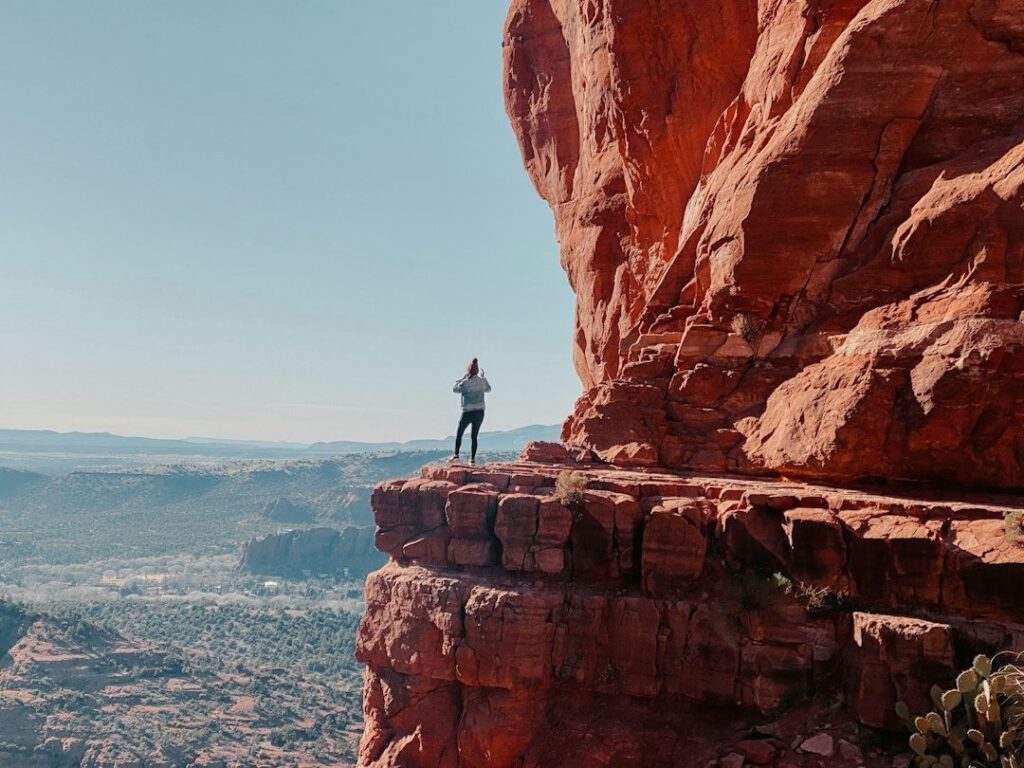
Photo by Michelle Williams on Unsplash
Alt text: A hiker standing on a red sandstone ledge above the Sedona valley
A house gives you a kitchen for 5 a.m. breakfasts and a patio for sunset. It also hands you more of the logistics. Homes run by a company offering short-term rental management in Arizona usually come with a permit number on the listing and a local contact for trail-day problems. This guide covers how Sedona’s trail system works and what to expect from the house.
Sedona sits at about 4,350 feet, in a bowl of red sandstone between the Colorado Plateau and the desert below. Hundreds of miles of trails run through the surrounding Coconino National Forest. Many trailheads are inside or right next to town.
That geography rewards an early start. Summer afternoons regularly pass 95°F, and the July to September monsoon brings lightning by mid-afternoon. Hikers who are on the trail at first light finish before the heat and the storms.
A rental makes those early starts easier. You can pack lunches the night before, lay out boots by the door, and leave without waking a front desk. After the hike, a shaded patio beats a hotel lobby for stretching sore legs.
Two systems decide how you reach the trails. Learn both before you pick a neighborhood.
The free Sedona Shuttle runs year-round from Thursday to Sunday. It links park-and-ride lots to five popular trailheads, including Cathedral Rock, Soldier Pass, and Little Horse. On shuttle days, the Cathedral Rock and Soldier Pass lots close to private cars.
The Red Rock Pass covers parking at most other Forest Service trailheads. It costs $5 for a day or $15 for a week, and an America the Beautiful pass works in its place. Shuttle riders do not need one.
Here is how that plays out across a typical long weekend:
Arizona sets the ground rules for vacation rentals in state law. The statute, A.R.S. 9-500.39, lets cities require a local permit, with a fee capped at $250. When a city does, the permit number must appear on every advertisement.
The same law requires an emergency contact who can respond “in a timely manner,” in person if police or fire ask. Owners must carry at least $500,000 in liability coverage or list on a platform that provides it. Verified violations cost up to $500 for a first offense and up to $3,500 by the third.
For a guest, this is a quick test. A Sedona listing should show a permit number. If it does not, ask before you book, because unpermitted rentals can be shut down.
Sedona spreads across several neighborhoods, and each one sits closer to different trails. Match the house to the hikes you care about most.
| Area | Nearby trails | Access notes |
| West Sedona | Soldier Pass, Boynton Canyon, Fay Canyon | Shuttle stop at Posse Grounds; Soldier Pass gated 6 p.m. to 8 a.m. |
| Uptown | Brins Mesa, Jordan Trail | Walkable to shops; busiest traffic on weekends |
| Village of Oak Creek | Bell Rock, Courthouse Butte | Easy morning access off State Route 179 |
| Oak Creek Canyon | West Fork, Slide Rock | Cooler in summer; narrow canyon road |
Slide Rock State Park deserves its own note. Entry is $30 per vehicle from May 1 to August 21, 2026, and $20 after that. Pets are not allowed in the park from May through September.
A professionally run Sedona rental anticipates hikers. Look for these six things in the listing or the welcome guide.
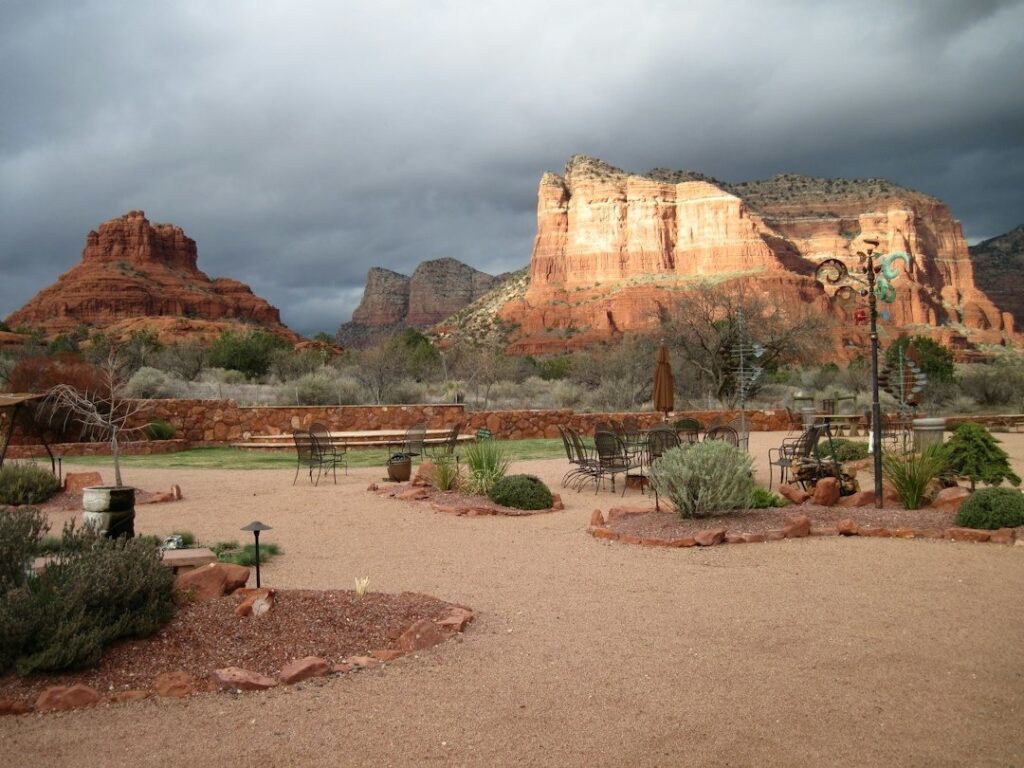
Photo by denise farley on Unsplash
Alt text: A garden patio with chairs facing Bell Rock and Courthouse Butte under storm clouds
Before you leave home, check our list of what to pack for hiking. Cell signal fades in some canyons, so a plan for staying connected is worth sorting too.
A Sedona hiking trip works best when the house supports the trail days. Choose a neighborhood near your top hikes and learn the shuttle schedule. Book a rental that shows its permit and has a local team on call. Then set the alarm early and catch the first light on Cathedral Rock.
Only if you park at a Forest Service trailhead that requires one. The pass costs $5 a day or $15 a week. Shuttle riders and America the Beautiful pass holders do not need to buy one.
The free shuttle runs year-round from Thursday to Sunday. On those days, the Cathedral Rock and Soldier Pass lots close to private cars. Check the schedule before you go, since holiday service can change.
Yes, when they hold the local permit Arizona law allows cities to require. The permit number must appear on every listing. If you cannot find it, ask the host before booking.
Spring and fall bring the mildest temperatures and the most stable weather. Summer works for sunrise hikes, but the monsoon brings afternoon storms from July to September. Winter is quiet and cool, with occasional snow on the rocks.
Counter
101 Countries • 1432 Cities