
Eight hours in a hotel bed should leave you ready for the day ahead. Yet after a long flight or a demanding travel schedule, it’s possible to wake up feeling as though you’ve barely slept. Even a decent sleep score doesn’t guarantee you’ll feel sharp enough for an early drive or a full day of sightseeing.
The problem isn’t always how much you slept. Travel can leave your internal clock out of sync with local time, interrupt your usual sleep patterns, or make the transition from sleep to wakefulness more difficult. These effects often overlap, which explains why one good night at a hotel doesn’t always undo the fatigue of getting there.
Before rearranging your itinerary or buying another sleep gadget, it helps to work out what’s actually keeping you groggy.
The heavy-headed feeling that follows waking has a name: sleep inertia. For a short period, your brain is still transitioning from sleep to full alertness. Attention, reaction time, and decision-making may be slower, even if you’ve had enough sleep.
Hilditch and McHill (2019) reviewed research showing that this impairment is generally strongest immediately after waking and gradually improves. Its severity depends partly on previous sleep loss and the time of day. Waking during your biological night, when your internal clock is still promoting sleep, can make the effect more pronounced.
On a trip, those first minutes matter more than they might at home. A familiar morning routine requires relatively little concentration. Navigating an unfamiliar road, making a train connection, or setting off on a challenging hike can demand much more attention.
Sleep inertia doesn’t necessarily mean you’ve slept badly. Nor can it be reliably explained by a smartwatch reporting that you woke during deep sleep. Consumer devices estimate sleep stages indirectly, and waking from a particular stage is only one possible influence on how alert you feel.
If the grogginess is strongest just after waking and steadily improves, sleep inertia may be contributing. Allow time to become fully alert before driving or beginning an activity that requires quick reactions. If the fatigue continues for most of the day, your recent sleep schedule and body clock deserve a closer look.
Jet lag is the most obvious suspect after an international flight, but it’s not the only reason travelers struggle the next morning.
Take a flight from Los Angeles to New York. Sleeping from 11 p.m. to 7 a.m. gives you eight hours on the local clock. Yet 7 a.m. Eastern is only 4 a.m. Pacific, and your body may still be following something closer to your usual West Coast schedule. You’re getting up at a reasonable time in New York, but potentially during your biological night.
That mismatch is jet lag. It occurs when rapid travel across time zones puts your circadian rhythm out of step with local time. Unlike sleep inertia, which is associated with the period immediately after awakening, jet lag can affect sleep and alertness throughout the day.
According to the CDC’s Yellow Book 2026, eastward journeys generally require shifting the body clock earlier, while westward journeys require shifting it later. Westward adjustment is often easier, although the number of time zones crossed and individual differences influence recovery. Travel fatigue can also occur without changing time zones. An early flight might require getting up at 3 a.m., while a late arrival can push bedtime back several hours. After a few days of shortened sleep, one full hotel night may not be enough to restore normal alertness.
Van Dongen and colleagues (2003) demonstrated this cumulative effect in a laboratory study. Healthy adults restricted to six hours of sleep per night showed worsening attention and reaction-time performance over two weeks, even when they did not fully recognize how much their performance had declined. Hotel conditions create another possible explanation. Street noise, an overheated room, uncomfortable bedding, or repeated awakenings can make sleep less continuous than it appears from the time spent in bed.
The pattern of your fatigue offers a starting point:
| What you’re noticing | What to check | What may help |
| Grogginess fades after you’ve been awake for a while | How quickly alertness returns | Give yourself more time before demanding activities |
| You’re sleepy at the wrong local hours | Time zones crossed and your usual home schedule | Plan appropriate light exposure and sleep timing |
| Tiredness lasts through the day | Sleep over the previous several nights | Protect adequate sleep on the following nights |
| You keep waking in the hotel | Temperature, noise, light, and other disturbances | Improve the sleeping environment |
These aren’t diagnostic categories. A red-eye flight across several time zones can leave you dealing with sleep loss, jet lag, and sleep inertia at the same time.
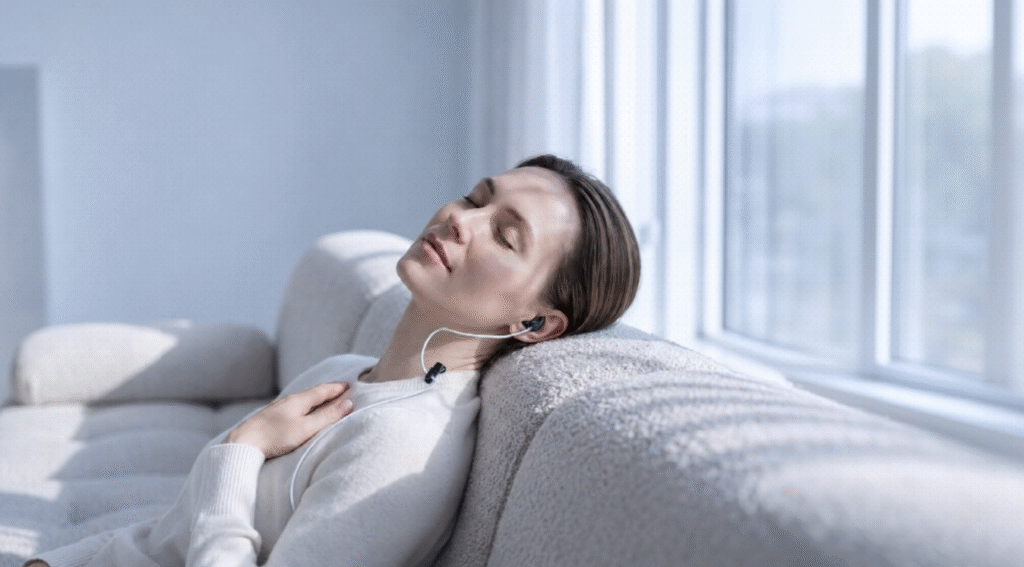
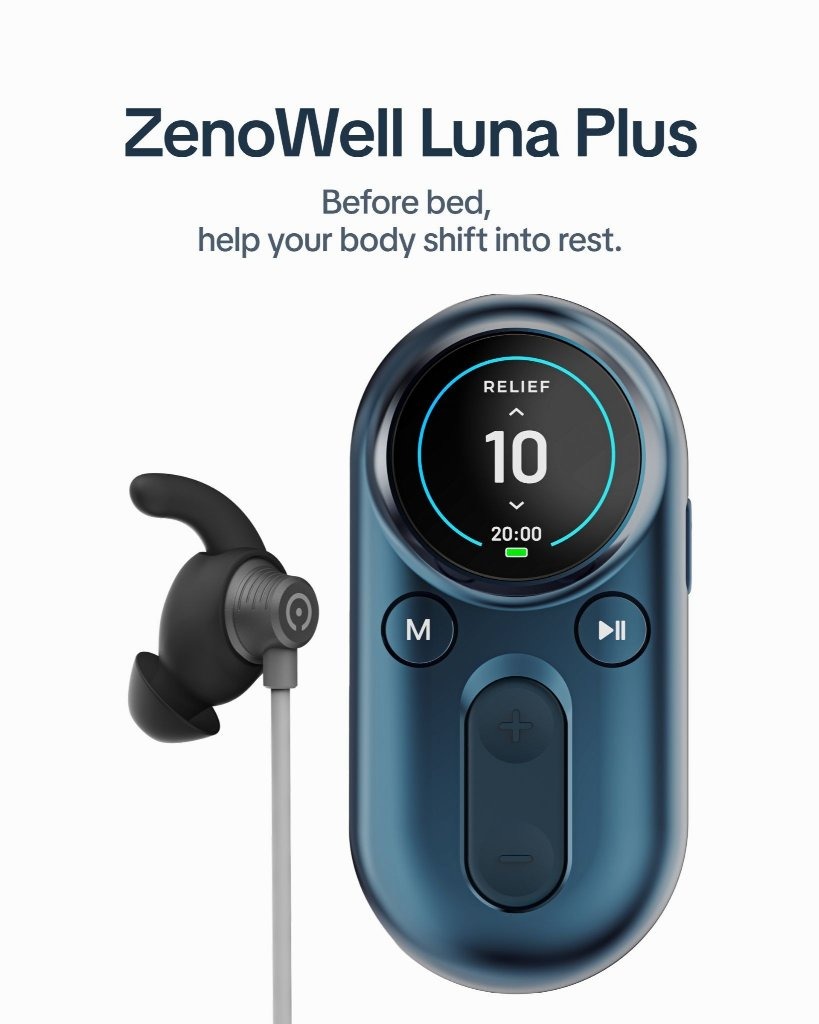
If changing hotels or traveling frequently makes evenings unpredictable, keeping one familiar activity before bed can be useful. Reading, stretching, or a short relaxation session requires little planning. Some travelers also consider wearable wellness tools for sleep routines, including ZenoWell’s portable, ear-worn devices, for a structured pre-sleep session. Such tools are intended to fit into a wellness routine, not to correct jet lag or eliminate morning grogginess.
One of the easiest travel mistakes is filling the arrival day before considering how much rest the journey will allow. A morning landing after a red-eye flight isn’t equivalent to arriving after a normal night at home. Even if you’ve managed to sleep on the plane, interruptions, cabin conditions, and an unfamiliar sleeping position may leave you short of proper rest. Scheduling a long drive immediately after landing adds a demand for alertness at the very point you’re most likely to be tired.
If the itinerary allows it, keep the arrival day relatively flexible. Save the longest driving leg or most physically demanding excursion for after you’ve had a reasonable opportunity to recover. When driving cannot be avoided, don’t rely on a brief burst of energy or a high wearable recovery score to decide whether you’re fit to drive.
For major time-zone changes, planning can begin before departure. The CDC describes gradually shifting sleep toward the destination schedule over the preceding days as one possible strategy. Moving bedtime and wake time earlier may help before eastward travel; shifting later may be relevant for westward journeys. Avoid creating substantial sleep loss while trying to make that adjustment.
Light is another important part of the plan, but the timing is not always intuitive. Exposure at different points in your biological day can shift the internal clock in opposite directions. Seeking bright light as soon as you wake locally is therefore not the right approach for every itinerary. For large time differences, a personalized jet lag calculator can help plan when to seek or limit light.
Travel duration matters as well. On a very short trip, maintaining something close to your home schedule may be more practical than trying to adjust completely. For longer stays, gradually aligning sleep, meals, and activity with local time becomes more useful.
The goal isn’t to follow a perfect travel sleep schedule. It’s to avoid arriving at your destination with an unnecessarily large sleep deficit and a first-day itinerary that leaves no room to recover.
If you wake groggy, start with the question of timing. Have you only been awake for a few minutes, or have you felt unusually sleepy since the previous afternoon? The answer changes what is worth trying.
For typical sleep inertia, a little time is often the most useful intervention. Get dressed, eat breakfast if you’re hungry, and move around before tackling the most demanding part of your morning. If you’re planning to rent a car, build that transition into your departure time rather than waking up at the last possible minute.
Don’t create extra morning time by routinely sacrificing sleep. When possible, move the first activity later instead of setting an earlier alarm.
Caffeine may temporarily improve alertness, but it won’t correct a shifted body clock or replace lost sleep. Large amounts late in the day can also interfere with sleep at your destination. If you’re adjusting to a new time zone, the timing of caffeine and light deserves more attention than simply increasing either one.
A short nap can be useful after overnight travel. The CDC suggests approximately 20–30 minutes to improve daytime alertness without taking too much time away from the next night’s sleep. Longer naps may leave you groggy on waking and make it harder to fall asleep at the intended bedtime.
If jet lag is the main issue, the following night’s schedule matters more than finding an immediate fix for the morning. Appropriate light timing, a reasonable local bedtime, and adequate sleep opportunity give your internal clock a chance to adjust.
Sleep technology can help frequent travelers spot recurring problems, particularly when the same travel habits disrupt sleep over multiple trips.
A smart ring or watch may reveal that early departures consistently reduce sleep duration. That information can support a concrete change, such as avoiding unnecessarily early flights or leaving more time between evening commitments and the next morning’s departure.
But an overnight sleep score has limits. Consumer wearables estimate sleep using movement and physiological signals rather than the full measurements used in laboratory sleep studies. Kainec and colleagues (2024) compared five commercial sleep trackers with research-grade methods and found differences in their estimates, particularly for certain sleep stages and wakefulness.
Even an accurate estimate of total sleep duration cannot tell you whether your circadian rhythm has adjusted to a new time zone. It also cannot determine whether you’re sufficiently alert to drive.

Not all sleep-related technology is designed to collect data. Some devices provide guided activities before bed, while others change the sleeping environment. Readers comparing smart sleep devices should pay attention to what each category actually does, rather than assuming that all devices marketed for sleep serve the same purpose.
Ear-worn vagus nerve stimulation devices, for example, deliver timed electrical stimulation at selected areas of the outer ear. ZenoWell’s devices are designed for wellness sessions while awake, which may suit travelers who prefer a repeatable activity before bed rather than another overnight tracker.
The underlying approach, called transcutaneous auricular vagus nerve stimulation (taVNS), has been investigated in clinical research, but findings from particular protocols cannot be taken as proof that a consumer device improves travel sleep or reduces jet lag. Electrode fit, session instructions, and safety restrictions also matter when using electrical stimulation.
For someone already sleeping well in hotels, another device may add little. For someone whose travel schedule is consistently disrupting sleep, the more important changes may involve flight timing, room conditions, or allowing enough time to rest.
Occasional grogginess after a flight is common. Persistent excessive daytime sleepiness, difficulty waking despite regular adequate sleep, or repeatedly dozing off during ordinary activities deserves medical attention.
Loud snoring accompanied by gasping, ongoing insomnia, and fatigue that continues well after travel may indicate a sleep or health condition rather than a problem with the itinerary. A wearable cannot diagnose those conditions, and a normal sleep score should not discourage someone from seeking assessment.
The same caution applies to driving. If you’re struggling to stay awake, postpone the journey or arrange another form of transportation. Neither caffeine nor a wellness device reliably compensates for significant sleepiness.
Travel can leave you groggy even after a full night of sleep because the number of hours you spend in bed is only one part of recovery. Waking at the wrong biological time, carrying sleep loss from earlier nights, or experiencing normal sleep inertia can all affect how ready you feel for the day.
The next step depends on the pattern. Grogginess that clears after waking calls for a less rushed morning. Jet lag calls for attention to sleep and light timing. Several short nights call for adequate rest, not another recovery score.
A well-planned itinerary should leave room for that adjustment. Getting more out of a trip sometimes means doing a little less on the first morning.
Centers for Disease Control and Prevention. (2025). Jet lag disorder. In CDC Yellow Book 2026: Health information for international travel.
Hilditch, C. J., & McHill, A. W. (2019). Sleep inertia: Current insights. Nature and Science of Sleep, 11, 155–165.
Kainec, K. A., et al. (2024). Evaluating accuracy in five commercial sleep-tracking devices compared to research-grade actigraphy and polysomnography. Sensors, 24(2), 635.
Van Dongen, H. P. A., Maislin, G., Mullington, J. M., & Dinges, D. F. (2003). The cumulative cost of additional wakefulness: Dose-response effects on neurobehavioral functions and sleep physiology from chronic sleep restriction and total sleep deprivation. Sleep, 26(2), 117–126.
Counter
101 Countries • 1432 Cities