
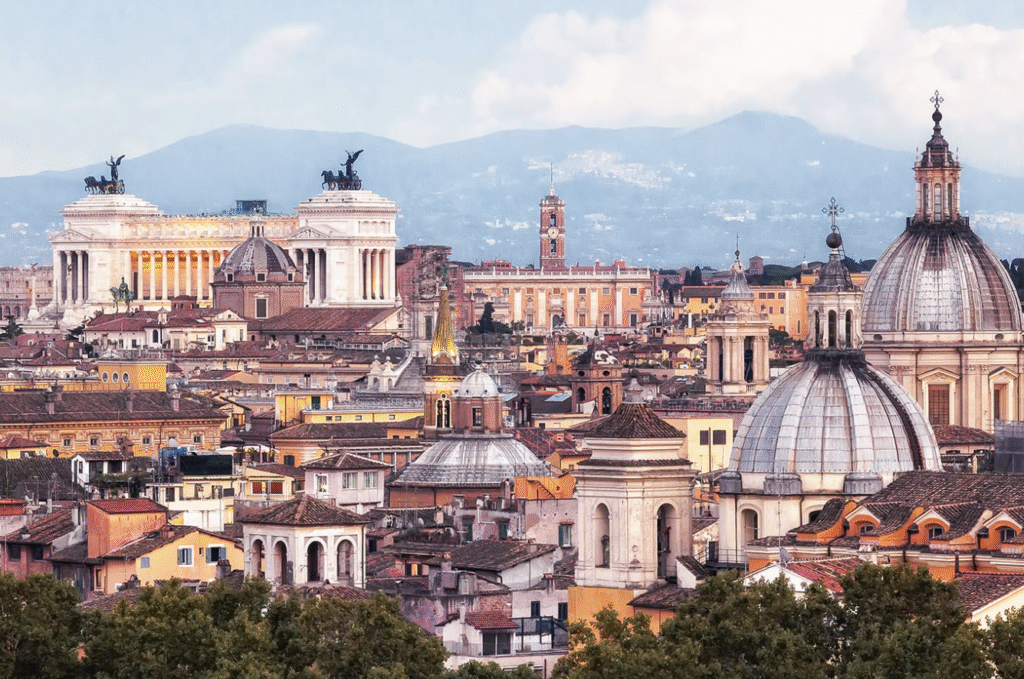
Rome is a city that rewards curiosity. Behind its famous monuments are neighborhood markets, family-run restaurants, centuries-old churches, and streets where ancient history is part of everyday life. But with so much to see, planning the perfect itinerary can feel overwhelming. Should you spend your morning exploring the Colosseum, discover Renaissance masterpieces at the Vatican, or wander through the neighborhoods where Romans live and eat? For travelers who want to experience more than a checklist of famous attractions, private tours in Rome offer an opportunity to discover the city through local knowledge, thoughtful storytelling, and a sightseeing experience centered on their interests.
One way to approach the Eternal City is to begin with a knowledgeable local guide and continue exploring independently afterward. Companies such as Kirba Tours offer private tours in Rome covering the Colosseum, Roman Forum, Vatican Museums, historic neighborhoods, traditional food experiences, and lesser-known archaeological sites. Travelers can compare different itineraries and choose an experience that fits their interests, available time, and preferred sightseeing style. Rather than trying to see everything, the goal is to use a guided experience to understand the city better and discover which places deserve a closer look.
This approach works particularly well in Rome, where historical landmarks and contemporary Roman life exist side by side. A morning spent exploring ancient ruins can lead to lunch in a neighborhood trattoria, an afternoon discovering small churches, or an evening wandering through a lively piazza. The most memorable experiences often come from finding the right balance between guided discovery and the freedom to explore on your own.
Rome is one of the world’s most fascinating cities, but its history can be difficult to understand without context.
At the Roman Forum, for example, visitors encounter an extraordinary collection of ruined temples, political buildings, and ancient streets. Without an explanation, these monuments can be impressive but confusing. A local guide can help you visualize the Forum as it once existed, when senators debated, merchants conducted business, and religious ceremonies shaped public life.
A private guided tour of Rome provides the opportunity to ask questions, explore historical connections, and concentrate on the subjects you find most interesting.
Unlike large group experiences, where the itinerary and presentation must accommodate many participants, private tours are reserved for your booking group. This can create a more personal atmosphere and make conversations with your guide easier.
However, private tours are not necessarily completely customizable. Monument reservations, admission requirements, security procedures, and scheduled durations may limit changes. Before booking, ask which aspects of the experience can actually be adjusted.
One of the best ways to plan your time in Rome is to decide what excites you most before choosing specific attractions.
Some travelers love archaeology. Others travel primarily for art, architecture, food, or the atmosphere of historic neighborhoods.
Rome offers enough variety to satisfy all these interests, but trying to experience everything in one day rarely produces the most rewarding visit.
If you’re fascinated by emperors, gladiators, and ancient civilizations, start with the archaeological heart of Rome.
The Colosseum is one of the most recognizable monuments in the world, but understanding how its spectacles worked adds an entirely different dimension to the experience.
A guide can explain the amphitheater’s architecture, the role of public entertainment in Roman society, and the lives of the people who participated in its events.
Nearby, the Roman Forum reveals the political, religious, and commercial center of the ancient city.
Above it, Palatine Hill offers another perspective on Roman history, from the city’s foundation legends to the residences of powerful emperors.
Travelers interested in a more detailed Colosseum experience can compare tours that include special areas such as the arena floor or underground levels. These sections require specific admission arrangements and are not included in every itinerary.
Independent exploration tip: After your guided visit, spend time in the nearby Monti neighborhood. Its cafés, small shops, and quieter streets provide an enjoyable contrast to the monumental archaeological area.
For art enthusiasts, Rome offers an extraordinary journey through different periods of European creativity.
The Vatican Museums contain collections spanning centuries, while the Sistine Chapel displays some of Michelangelo’s most celebrated frescoes.
St. Peter’s Basilica presents another artistic experience, with Michelangelo’s Pietà and Bernini’s monumental Baldacchino among its greatest treasures.
A private guide can help visitors understand how these masterpieces connect with the religious, political, and artistic history of Rome.
Before booking, remember that the Vatican Museums, Sistine Chapel, and St. Peter’s Basilica are not automatically included together. Check the exact itinerary and admission arrangements.
Art lovers should also leave time for the city’s historic churches, where impressive paintings, sculptures, and architectural details can be found beyond the major museums.
Independent exploration tip: After visiting the Vatican area, consider a relaxed walk through nearby streets and squares, allowing time to stop at smaller churches or cafés that catch your attention.
Some of Rome’s most interesting stories are found away from its largest monuments.
Trastevere, across the Tiber River, is known for its winding streets, historic churches, neighborhood squares, and restaurants.
A guided walk can introduce the area’s long history and explain how it developed its distinctive identity.
Another rewarding destination is Rome’s historic Jewish Quarter, where Jewish traditions, Roman history, and local food culture intersect.
Exploring the neighborhood with historical context helps travelers understand the community’s long presence in Rome and the difficult chapters of its history.
Nearby Tiber Island adds another layer to the experience, connecting ancient traditions with the urban landscape that developed around the river.
These areas are particularly appealing to returning visitors who have already explored Rome’s most famous attractions.
Independent exploration tip: Revisit a neighborhood after your guided walk. Once you understand its history and layout, you may notice architectural details, shops, and local traditions that escaped your attention the first time.
For travelers who love discovering cultures through food, Rome is an especially rewarding destination.
Traditional Roman cuisine reflects centuries of agricultural traditions, local ingredients, and neighborhood cooking.
Some of the city’s signature dishes include cacio e pepe, carbonara, amatriciana, and gricia.
Each has its own history, ingredients, and preparation techniques.
A culinary experience can help visitors understand the differences between these dishes and learn how Roman food connects with the city’s identity.
Hands-on cooking classes offer another perspective, allowing travelers to prepare fresh pasta and explore Italian cooking traditions through direct participation.
For those interested in everyday food culture, neighborhood markets and specialty shops can be just as memorable as a restaurant meal.
David’s Been Here has also explored Rome’s culinary traditions in its guide to the Testaccio neighborhood, an area strongly associated with traditional Roman food.
Independent exploration tip: After a food-focused experience, return to a market or neighborhood restaurant on your own. Understanding the ingredients and dishes makes choosing what to eat much more enjoyable.
Rome rewards travelers who are willing to explore beyond the most recognizable landmarks.
The Basilica of San Clemente, for example, reveals multiple layers of the city’s history beneath the present-day church.
The Baths of Caracalla offer a sense of the extraordinary scale of ancient Roman public architecture.
Farther from the historic center, the Appian Way connects visitors with ancient roads, funerary monuments, and archaeological landscapes.
These experiences can be particularly rewarding for travelers returning to Rome or those with a strong interest in archaeology.
Instead of concentrating exclusively on famous highlights, consider dedicating part of your trip to one less familiar historical site.
A private tour is not necessary for every traveler or every attraction. There are, however, situations where it can be especially useful.
If this is your first visit, a guide can help you understand the geography, history, and character of Rome.
Starting with a guided experience can also make the remainder of your trip easier to organize.
With only one or two days in Rome, choosing a focused itinerary can prevent unnecessary travel between distant attractions.
A guide can help you concentrate on the places that matter most rather than trying to fit too much into the schedule.
Children may find Roman history more engaging when it is presented through stories about gladiators, emperors, mythology, and everyday ancient life.
Private experiences also make it easier to discuss children’s ages, interests, and attention spans before booking.
Families should still confirm walking distances, breaks, stroller access, and age restrictions for particular activities.
Couples and groups of friends may appreciate the opportunity to explore together without joining a larger group of strangers.
The private format can be especially appealing for travelers celebrating a special occasion or sharing a particular interest.
If you’ve already visited the Colosseum and Vatican, consider focusing on archaeology, neighborhoods, art, or food experiences that reveal a different side of Rome.
Repeat visits are an opportunity to explore fewer places in greater depth.
Before booking, it’s useful to compare the advantages of different sightseeing styles.
| Experience | Main Advantage | Best Suited For |
| Private Guided Tour | Personal interaction with a guide and an experience focused on your booking group. | Families, couples, small groups, and travelers with specific interests. |
| Shared Group Tour | Often more economical, with a structured itinerary and opportunities to meet other travelers. | Solo travelers and visitors comfortable following a fixed schedule. |
| Independent Exploration | Freedom to choose your route, timing, restaurants, and stops. | Travelers who enjoy researching and navigating on their own. |
There is no universally correct choice.
In fact, combining these approaches can be the most satisfying way to experience Rome.
You might begin with a private archaeological tour, spend the afternoon exploring independently, and join a small-group activity on another day.
The goal is to create a trip that reflects how you enjoy traveling.
Not all private guided tours include the same services, so reading the individual description carefully is essential.
Before choosing an experience, consider the following questions:
These details matter because a private experience should be selected for its actual itinerary and inclusions, not simply for the word “private” in its title.
One of the most effective ways to enjoy Rome is to treat a guided tour as the beginning of your exploration rather than the entire day’s activity.
A local guide can provide historical context, explain the layout of an area, and introduce subjects you may want to investigate further.
Afterward, you can follow your curiosity.
Before the experience ends, ask which nearby streets, squares, or cultural sites are worth exploring independently.
You might discover a quieter church, an interesting architectural detail, or a neighborhood that deserves more time.
These suggestions can help you develop your own itinerary without depending on a guide for every activity.
One of Rome’s greatest pleasures is simply walking through its neighborhoods.
An unexpected courtyard, a small bookstore, or a beautiful piazza can become a highlight of the day.
Avoid scheduling every hour so tightly that you have no time for spontaneous discoveries.
If your guide introduces a neighborhood or monument you particularly enjoy, consider returning later.
A second visit allows you to appreciate the place at a different pace, take photographs, or spend time observing daily life.
If your morning focused on history, let the afternoon introduce you to Roman food culture.
Find a neighborhood trattoria, explore a market, or sample a traditional pastry.
Connecting food with history creates a more complete understanding of the destination.
These sample itineraries are planning ideas rather than fixed tour packages. The exact route and timing will depend on the guided experience you select.
Morning: Begin with a private guided experience focused on the Colosseum, Roman Forum, and Palatine Hill. Learn about Roman public life, imperial politics, and the archaeological remains of the ancient city.
Lunch: Find a restaurant near the archaeological district and take a break from sightseeing.
Afternoon: Explore Monti independently. Enjoy the neighborhood’s streets, cafés, independent shops, and relaxed atmosphere.
Evening: Choose a local restaurant and enjoy a slower-paced dinner.
This itinerary combines major historical attractions with an opportunity to experience contemporary neighborhood life.
Morning: Take a private walking tour focused on the historic center, exploring landmarks such as the Pantheon, Piazza Navona, or Trevi Fountain, depending on the selected itinerary.
Lunch: Enjoy a traditional Roman meal and try a dish you haven’t tasted before.
Afternoon: Choose a neighborhood such as Trastevere or Testaccio for independent exploration. Allow appropriate travel time between districts.
Evening: Return to a neighborhood you enjoyed earlier and experience the atmosphere after sunset.
Rather than crossing the city repeatedly to collect famous landmarks, this approach offers a balance of cultural experiences and free time.
Even with a well-planned itinerary, Rome can be physically demanding, especially during the warmer months.
A few practical habits can make your visit more comfortable.
Private tours can be worthwhile for travelers who appreciate personalized attention, historical explanation, and the opportunity to ask questions directly. Their value depends on the itinerary, guide, group size, and your interests.
Some private experiences allow adjustments, but customization is not automatic. Monument reservations, entrance procedures, and scheduled routes may restrict changes. Confirm available options before booking.
The Colosseum, Roman Forum, Palatine Hill, Vatican Museums, St. Peter’s Basilica, Pantheon, and historic center are popular starting points. However, you do not need to visit all of them in a single day.
Many private experiences can be suitable for families, particularly when children enjoy history, food, or interactive activities. Check age requirements, walking distances, and the possibility of breaks before booking.
Absolutely. A guided experience can help you understand a neighborhood’s history and layout, making it easier to continue exploring independently afterward. Check where your tour ends so you can plan the rest of your day.
Inclusions vary. Some experiences include attraction tickets, while others focus on guided sightseeing without admission to certain monuments. Always check the individual tour details.
The beauty of Rome is that there is always another layer to discover.
The Colosseum reveals the spectacular world of ancient public entertainment. The Roman Forum tells the story of political power. The Vatican preserves extraordinary artistic achievements, while neighborhoods such as Trastevere and Testaccio introduce travelers to different aspects of everyday Roman life.
But experiencing the city is about more than visiting famous attractions.
It is also about understanding why those places matter, discovering how different historical periods connect, and making time for the small experiences that give a destination its character.
Private tours in Rome can provide a valuable starting point, particularly for travelers who want a focused introduction to the city’s history, art, food, or neighborhoods.
The best approach is to choose a tour that reflects your interests, ask questions, learn from the local perspective, and then leave enough time to explore independently.
Whether you’re visiting Rome for the first time or returning to discover something new, combining guided experiences with your own curiosity can turn an ordinary sightseeing itinerary into a more personal and rewarding journey.
Explore Rome at your own pace, follow the stories that interest you, and remember that some of the best travel experiences begin when you put away the checklist and simply discover what’s around the next corner.
Counter
101 Countries • 1432 Cities