Watching someone slurp noodles on a food video is one thing. Standing at a smoky Bangkok cart with no English menu is another. Most first-timers eat well but miss half of what they came for. A little structure turns one hungry day into a proper food crawl.
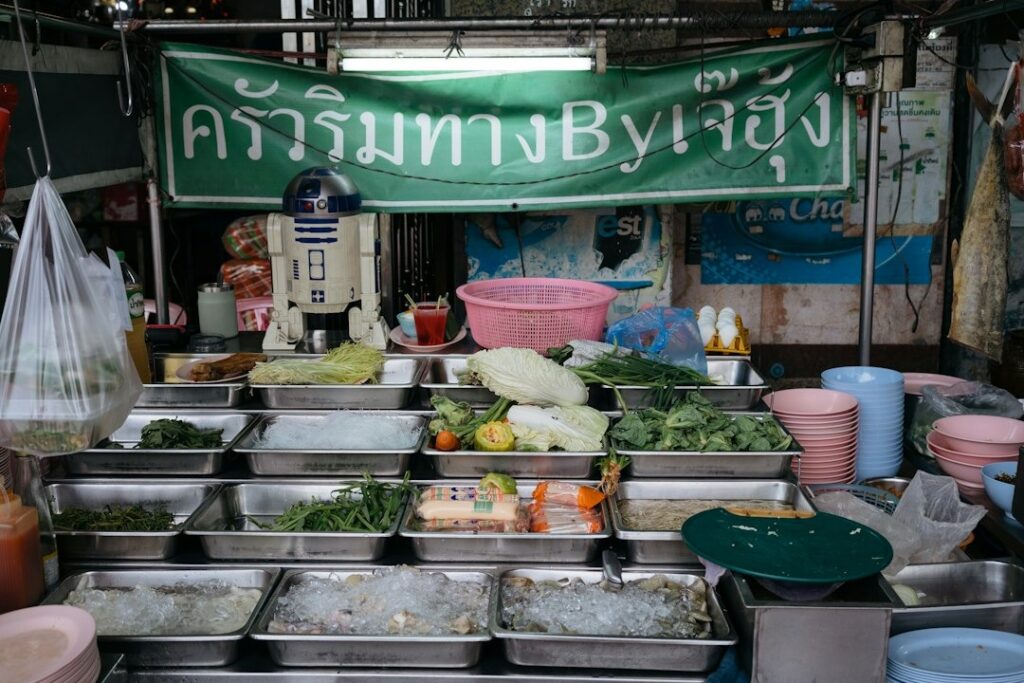
Photo by Markus Winkler on Unsplash
Alt text: a bunch of food that is on a table
The plan below runs from a morning fresh market to a late supper in Chinatown. If you want a local at your side, Your Thai Guide offers private Bangkok days led by licensed, English-speaking guides. The company builds each day around what guests ask for before the trip. For a food-led visit, that means more stalls and fewer palace queues.
Bangkok cooks around the clock, but not every dish appears at every hour. Rice porridge and soy milk rule the early morning. Curries over rice fill the lunch trade. Grills, woks and dessert carts take over after dark.
Many stalls also sell one dish only, and some close one day a week. Turn up at the wrong time and you face shuttered carts. A rough timetable keeps you eating the right food at the right hour.
A fresh market is the best warm-up. Or Tor Kor market, beside Chatuchak, is a favorite for its clean, covered halls. It sells tropical fruit, curry pastes, dried seafood and ready meals.
Go early, before the heat builds. Buy a mixed bag of fruit you have never tried, such as mangosteen, rambutan or rose apple. Vendors will often cut a sample if you point and smile. Many also sell ready-cut pieces in a bag with a small wooden pick. Graze rather than sit down, because lunch and dinner still lie ahead.
Midday is the hottest part of the day, so keep lunch simple and shaded. A khao gaeng is a rice-and-curry shop with trays of dishes lined up behind glass. You point at two or three, and the cook spoons them over a plate of rice. It is the fastest way to sample several curries in one sitting.
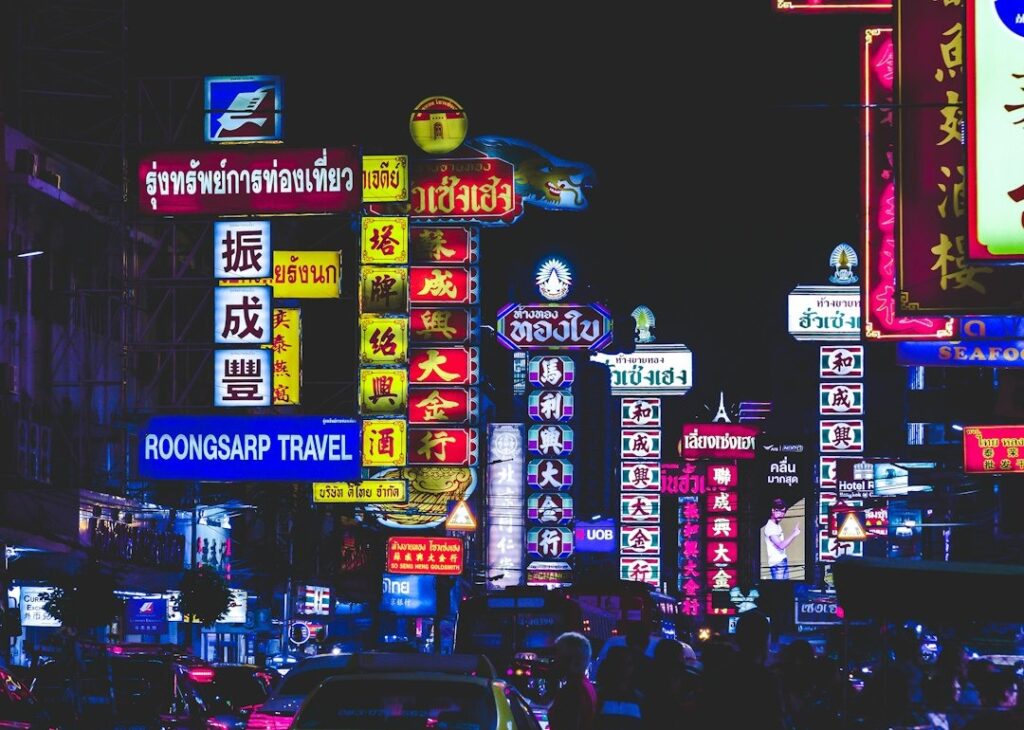
Photo by Waranont (Joe) on Unsplash
Alt text: LED signages at night
After lunch, rest somewhere cool for an hour or two. A hotel pool, a mall food court or an air-conditioned cafe all work. The pause keeps your appetite intact for the evening, which is the main event.
Locals vote with their feet, so the queue is your first clue. A few other signs help when the crowd is thin:
That logo comes from Clean Food Good Taste, a Department of Health hygiene certification for food outlets. The scheme is run under the Ministry of Public Health. At Suvarnabhumi Airport, 58 restaurants hold it, or 85.29% of the terminal’s outlets. A missing sticker does not mean a stall is unsafe. It is simply one more cue to weigh.
Thai street dining is relaxed, but a few habits mark you as a considerate guest.
If noodles are your weakness, the tiny bowls at Bangkok’s boat noodle alley stack up faster than you expect.
Yaowarat Road is the spine of Bangkok’s Chinatown. By day it trades in gold and dried goods. After sunset, carts and plastic stools spill onto the pavement under neon signs.
Getting there is easier than it used to be. Wat Mangkon station on the MRT Blue Line opened in 2019, a short walk from the main strip. Check current Blue Line routes and fares before heading over. Arrive around 6pm to beat the densest crowds.
Plan on four or five small plates rather than one big meal.
| Dish | What it is | Why order it |
| Kuay jab | Rolled rice noodles in a peppery broth | A Chinatown classic with deep flavor |
| Grilled seafood | Prawns, squid or fish cooked over charcoal | Smoky, fresh and good for sharing |
| Pa thong go | Crisp fried dough sticks | A sweet or savory snack to eat walking |
| Toasted buns with custard | Soft bread with pandan or egg dip | A gentle dessert after the chili |
For a broader look at what to see and eat across the city, this Bangkok video guide pairs well with the plan above.
You can eat well in Bangkok alone. A guide simply removes the friction that slows a food day down.
Your Thai Guide describes its team as a small group of Thai-born private guides. You list the dishes and neighborhoods you care about, and the itinerary follows that list. A food lover can ask for markets and Chinatown instead of the standard temple loop.
Most visitors eat street food without trouble. Choose busy stalls, food cooked in front of you, and bottled drinks. Ease in slowly if your stomach is sensitive.
Early evening works best. The carts are open, and the crowds are lighter before 7pm.
Yes. Your Thai Guide asks about your interests before the trip and builds the route around them. A day of markets and stalls is a fair request.
Aim for 8 to 10 small portions spread across the day. Sharing plates lets you taste more without feeling stuffed.
The best Bangkok food days are slow ones. Start at a market, rest through the hottest hours, and save your appetite for Chinatown. Bring small notes, a pack of tissues and an empty stomach. With a loose plan, every stop feels like a discovery rather than a gamble.
Counter
101 Countries • 1432 Cities