

During my visits to Caceres and Merida, I was able to fit in several day trips. The below are my 6 must-see towns in Extremadura, Spain. Each has its own unique character and history, and I would encourage anyone with a few spare days to explore as much as they can.
Known as the “Little Seville” because of its white houses and breezy porticos, Zafra is a small town located about 38 miles (60 km) south of Mérida. Its cobblestone streets, courtyards and carnation flowers adorning the buildings have earned its reputation as a charming stop-off point for those passing through Extremadura.
Zafra is situated at the base of the Sierra de Castellar Mountains and is a common layover town for those driving between Sevilla and Cáceres. It only takes a day to leisurely explore Zafra on foot. The main attraction in town is the Parador de Zafra, a 15th century Moorish castle-turned upscale hotel (Plaza Corazon de Maria, 7).

“Paradors” are government-operated hotels, which are usually historical buildings. There are dozens of them situated across Spain. The Parador de Zafra features a 16th century courtyard, original stone walls, award-winning restaurant and stately décor. The two main squares of Zafra- Plaza España (a.k.a. Plaza Grande) and Plaza Chiquita- are good places to begin your walking tour. Coffee shops, boutiques and restaurants line the edges of the plazas. The tourist office is located at Plaza España, 8 and is open daily.
Make your way to see the last two surviving gates of the city- the Door of Jerez and the Arch of Cubo. Calle Sevilla, the main pedestrian walkway, is the best place to shop for Spanish souvenirs. Being at the base of a mountain range has its benefits- scenic panorama to enjoy as you stroll through the narrow, historical streets.
How to get there: Driving from Mérida to Zafra takes about one hour by taking the A-66 and the EX-101 highways.
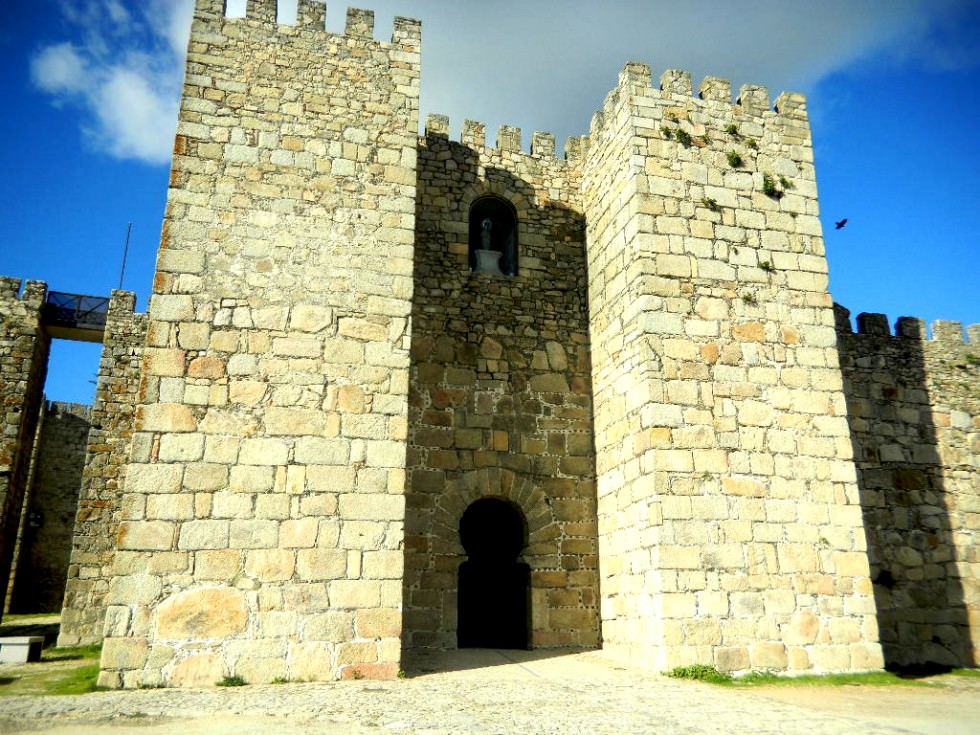
Jerez de los Caballeros is an amazing hidden gem located just 12 miles east of the Portuguese border. Jerez de los Caballeros is located in the southwest region of Extremadura and seduces visitors with its sweeping countryside landscape. Named after the Knights Templar, it is a beautiful, hilly town surrounded by a Moorish wall that is still perfectly intact. Jerez de los Caballeros was the birthplace of explorer Vasco Nuñez de Balboa, known for reaching the Pacific Ocean by crossing the Isthmus of Panama. Panama’s main port and official currency are aptly called Balboa.
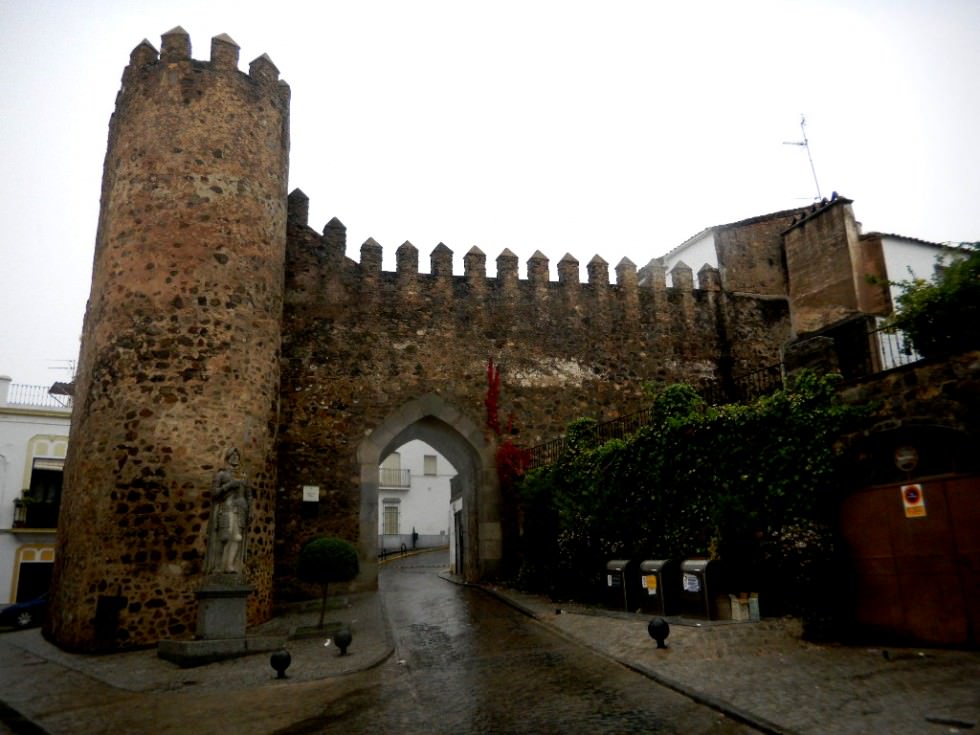
There are six gates to this medieval city. The gate that I recommend should be seen is the 15th century Gate of Burgos located on Calle Templarios. The town’s other attractions include a Templar fortress, several religious buildings and historical “solares” (noblemen’s houses.)
How to get there: Jerez de los Caballeros can be reached by heading south on the E-803 from Mérida, and then exiting on the EX-101 close to Zafra. From there, follow the EX-112 for about 20 minutes.
Guadalupe is a small town east of Cáceres known for its main attraction, Real Monasterio de Nuestra Señora de Guadalupe, or Shrine of Our Lady of Guadalupe. This is one of my favorite towns in Extremadura because it can easily be reached by bus or car from Cáceres or the nearby town of Trujillo. Once in Guadalupe getting around on foot is simple and convenient. All of the town’s main sites are within 3 to 5 minutes of each other, making it a stress-free day trip from Cáceres. Our Lady of Guadalupe has been a symbol of Spanish culture since the 15th century and the shrine complex has been an important Christian pilgrimage site for just as long.
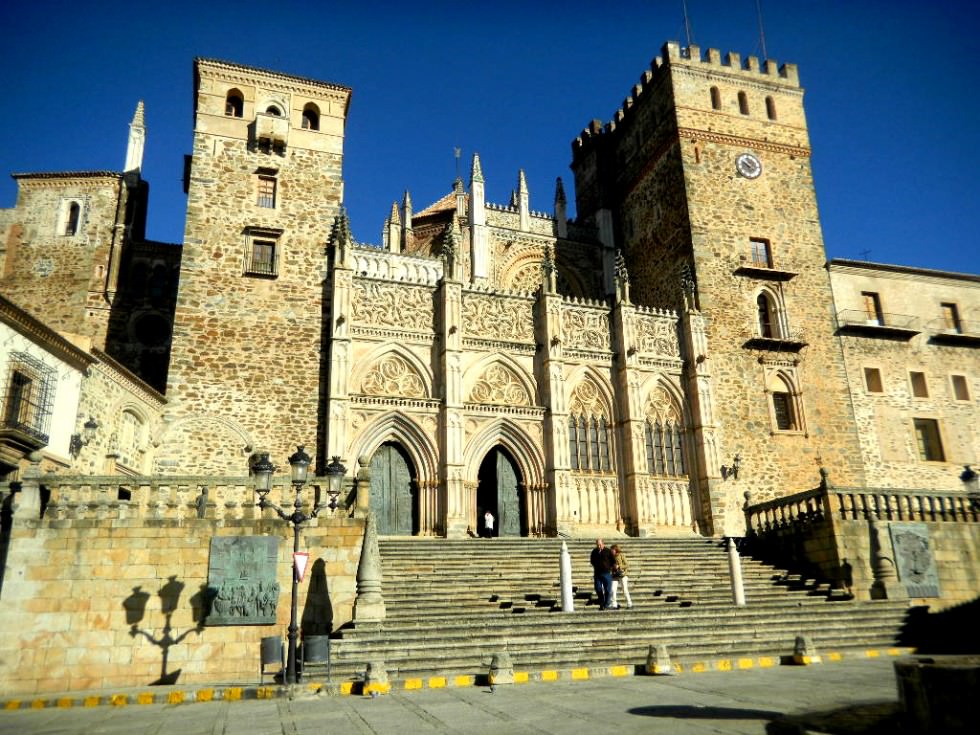
The shrine was built to commemorate the dark, cedar wood statue of the Virgin Mary believed to have been carved by St. Luke. Visitors should head to the town’s Plaza Mayor to begin the tour of the monastery. Tours, although obligatory, are a fantastic and cheap way (only 3 euros) to learn about the history of the monastery from an incumbent Franciscan friar.
Your tour will take you through several chapels, beautifully preserved book archives, embroidery exhibits, the choir, sacristy, and finally to the Camarín. The Camarín is where visitors will encounter various paintings, murals, sculptures, and the celebrated black statue of the Virgin after which the complex is named. Hours of operation are 9:30 am to 1:00 pm and from 3:30pm to 6:30 pm.
Trujillo is 13th century town located approximately 29 miles (45 km) east of Cáceres. Trujillo is known as the “conquistador town” because of its famous inhabitants who helped conquer the New World. The proud town was home to several conquerors including Francisco Pizarro (Peru), Diego García de Paredes (Trujillo, Venezuela), Francisco de Orellana (Guayaquil, Ecuador) and many more.

Its striking Plaza Mayor is where all visitors should begin their tour. The Plaza is framed by churches, three palaces, and charming cafés. In its center is a bronze statue commemorating Francisco Pizarro. Don’t forget to stop by Corral del Rey (see Restaurants section) for a fantastic lunch close by Plaza Mayor. Beyond the Plaza [and hopefully on a full stomach] visitors can stroll the narrow streets or head up Calle Ballesteros to view some of Trujillo’s other attractions.
Trujillo’s sites include the Santiago and Santa María Mayor churches. The latter gives visitors sprawling views of Trujillo from its tower. Santa María Mayor Church is open every day from 10 am to 2 pm and from 4:30 pm to 7 pm. Admission is 1.50 Euros.
Continuing uphill will bring you to the Casa Museo Pizarro; Pizzaro’s former residence turned museum, and the Trujillo Castle and fortress. Casa Museo Pizarro is open every day from 10 am to 2 pm and from 4:30 pm to 7 pm. Admission is 2 Euros.
For those seeking food festivals, Trujillo hosts the National Cheese fair every May. This is a very important Spanish competition and great opportunity for tourists to sample and buy delicious, award-winning cheeses.
Alcantara is a small, almost ghostly town located northwest of Cáceres that can be explored in less than a day’s time. Alcantara’s main attraction is the Roman Bridge located just outside of town. The 6-arch bridge is about 656 feet (200 meters) in length, 196 feet (60 meters) high, and is constructed completely out of granite with no mortar between the stones. The bridge crosses the Tajo, or Tagus River and was built in 106 AD in tribute of the Roman Emperor Trajan. Trajan was a beloved ruler and successful conqueror who greatly advanced the public works program of the empire. He was, however, a lover of wine and young boys. The triumphal arch over the middle section of the bridge was designed especially for him.
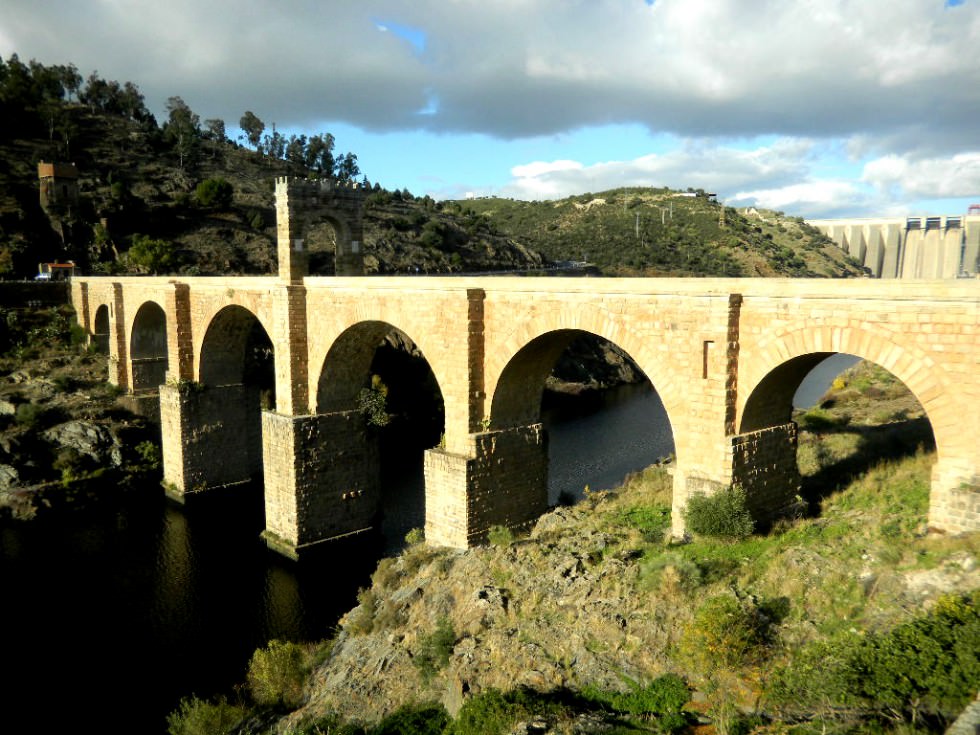
The Moors eventually settled in Spain and named the town after the Arabic word for bridge, “Al-Qantarah.” The Moors destroyed the bridge in the 11th century, but thankfully it has since been restored several times and now is one of Spain’s most handsome Roman structures. The bridge can be walked or crossed with a car, and is often the scenic route of choice for drivers headed to the nearby Portuguese border.
How to get there: Driving from Cáceres to Alcantara takes approximately 1 hour. Take the N-521 west to exit Cáceres, and then exit onto EX-207, which will bring you directly into Alcantara.
Amongst the flat plains west of Cáceres is Los Barruecos, a protected national park located in the small town of Malpartida de Cáceres. Los Barruecos contains massive, millennia-old granite rocks, a host of bird and fish species, the remains of an ancient Roman villa, tombs, prehistoric cave paintings, and the captivating Vostell Museum.
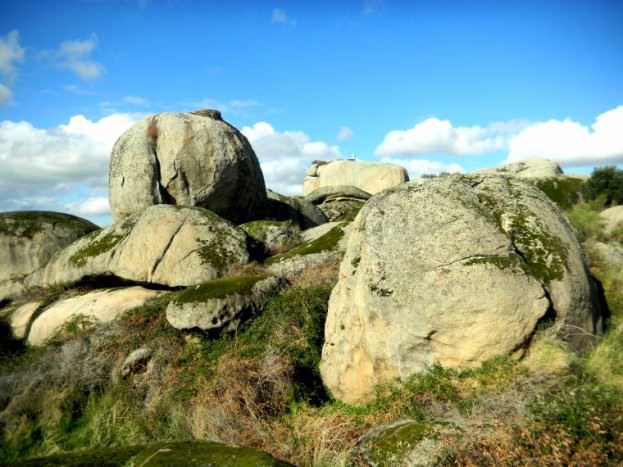
Los Barruecos’ infamous rocks have been a part of the landscape for over 500 million years, back when the Earth’s plates were shifting and causing magma to spew out onto the land’s surface. Millions of years of weather have given these colossal rocks a smooth finish. They sit perched, stacked, solitary, and grouped around several lakes and ponds, and give visitors the feeling of being on another planet.
For nature enthusiasts there is much to see. Dozens of ducks, owls, herons, hawks, and storks call Los Barruecos home. But the animals are not the only ones that have taken advantage of the shelter this unique stone landscape offers- there is evidence in rock carvings and drawings that people inhabited this area over 10,000 years ago. The remains of an ancient Roman village can also be explored.
After you have experienced the geological and ecological splendor of Los Barruecos, head over to the Vostell Museum for a glimpse inside the creative mind of the acclaimed German artist and painter, Wolf Vostell. It seems fitting that the Vostell Museum sits in such a remarkable natural setting- the contrast between Vostell’s mechanical, bold designs and the natural beauty of Los Barruecos is truly one of a kind. The Vostell Museum is open Tuesday through Sunday and admission is 2.50 Euros.
There are not many distinguishing markers in Los Barruecos, but the place is great for visitors who love to spend time outdoors in the fresh air walking, climbing, hiking, or photographing. Visitors should also make sure to bring a sunscreen and a bottle of water with them, especially if the park’s cafeteria is closed. It could be an especially hot day and water will be your best friend in the hot Spanish sun.
Have you visited any towns in Extremadura? Leave us a question or comment below!
To the best of our knowledge, all of the information provided in this post was accurate at the time of publishing. Davidsbeenhere.com, LLC. assumes no responsibility for changes or errors.
Counter
101 Countries • 1432 Cities


Martha says:
Hi David,
What a great blog! Many useful information =)
So, I have been staying in Cáceres with an injured leg for 4 days. During my stay, I have visited Cáceres itself, Guadalupe, Trujillo and Los Barruecos. Tomorrow I will go to Plasencia.
I have one more day and I am not sure where to go by public transportation. Everyone is telling me Mérida, but I am not sure since I am not that into Roman art (and have been to Ephesus, Turkey… Sorry I shouldn’t compare…) Also, my leg hurts if I walk up and down. The good thing is that there are many Renfe that goes to Mérida even on Sunday. Question 1. How much time would I need in Mérida if I do go?
Question 2. Any other recommendation?
Thanks in advance!
Martha
David says:
Hi Martha,
Thanks for writing me. I am sorry to hear about your leg. You only need one day in Merida to see the main sites. Two days would be ideal. Here is everything you need to know about Merida: https://davidsbeenhere.com/2014/01/28/what-see-do-merida-spain/
Sue says:
We are flying into Madrid February 4. We are 2 parents and an adult daughter. We have done a lot of traveling in Spain, but never Exremadura. We are ultimately heading to Sevilla, on Feb. 8, where our son lives. Thoughts for our driving trip: La Vera, Granadilla, Alcantara, Caceres, Trujillo, Guadelupe, Merida, Zafra, Jerez de los Cabelleros. We are good travelers and like to move! Do you think this is possible… what would you skip or add? Which cities would be best for staying over night? I appreciate any input what so ever! Thank you
David says:
Hi Sue, it takes 3 hours from Madrid to Caceres. I personally would do this itinerary:
Feb 4: drive from Madrid to Caceres and sleep in Caceres.
Feb 5: Visit Guadelupe (try morcilla there) and have lunch in Trujillo (sleep in Trujillo or go back to sleep in Caceres)
Feb 6: Wake up early and go to Alcantara to see the bridge. Continue to Merida for lunch and to see the old town/ bridge/ aqueduct/ etc. Sleep in Merida.
Feb 7: Take a day trip to Jerez de los Caballeros and Zafra – have lunch in either town. Sleep in Merida.
Feb 8: Drive from Merida to Sevilla
I would suggest sleeping in Caceres and Merida and doing day trips so that your belongings are not left in your rental car every day while you sightsee. Many hotels won’t let you check in until 3pm. If you want to fit an extra place in, sleep in Cazalla de la Sierra on the 7th, see the town in the morning before heading to Sevilla (it’s on the way).
If you need some more info about what to see, here are other articles I wrote:
https://davidsbeenhere.com/2016/09/12/things-see-caceres-spain/
https://davidsbeenhere.com/2014/01/28/what-see-do-merida-spain/
https://davidsbeenhere.com/2012/01/30/top-five-roman-ruins-in-extremadura-spain/
Enjoy your road trip! Sounds very exciting 🙂
Sue says:
Thank you for the recommendations! Greatly appreciated!
Keith Benson says:
I have now been to Extremadura six times in the last four years…I am enchanted! My friend is a fisherman and has a flat in Medellin that I stay at – I am still to go any further north than Plasencia, but I will one day!
My last trip in September included three days visiting Alburquerque , Badajoz ( http://hotellisboabadajoz.es/ ), Olivenza, Barcarrota, Jerez De Los Caballeros, Fregenal De La Sierra, Zafra ( http://www.hotelplazagrande.es/ ), Burguillos De Cerro and Feria – all beautiful, brilliant places. I may revisit some next trip! 🙂
Abhimanyu says:
Hi David,
I am travelling with my wife in july for 15 days to spain,however we are doing a road trip from madrid to valencia and then flight to ibiza and barcelona .Enroute we are staying at seville for 2 nights,Marbella for 3 nights.
Would like your suggestions on:
1) For the best route to take from madrid to seville and which places should we stop for few hours for a quick tour.
2) Required route suggestions from seville to marbella and which places to stop for a quick tour
3) Suggested routes from marbella to valencia and stop over places
4) We are interested in driving through the hills and small towns rather than taking the main highways.
According to my research i have shortlisted few places
MAdrid – Seville
– Toledo
– Trujillo
– Merida
– Zafra
Seville to Marbella
– Arcos
– Ronda
– Sierra de Grazalema Natural park
Marbella to Valencia
– Malaga
– Granada
– Almeria
– Murcia
Request you to suggest me an itinerary keeping in mind the above mentioned details.
APPRECIATE AND THANKS IN ADVANCE
REGARDS
Chris J says:
Hi David,
My girlfriend and I are off to Extremadura at the start of Otober and I was wondering, is Badajoz worth visiting? I understand it is the biggest city in Extremadura but I seem unable to find much information on what is actually there.
You advice would be much appreciated.
David says:
Hi Chris, thanks for your comment and apologies for getting back to you so late 🙁 I hope you were able to figure out your Extremadura trip, and that you had a fantastic time!